
Robotic Cancer Surgery at Sri Shankara Hospital Bangalore — What to Expect
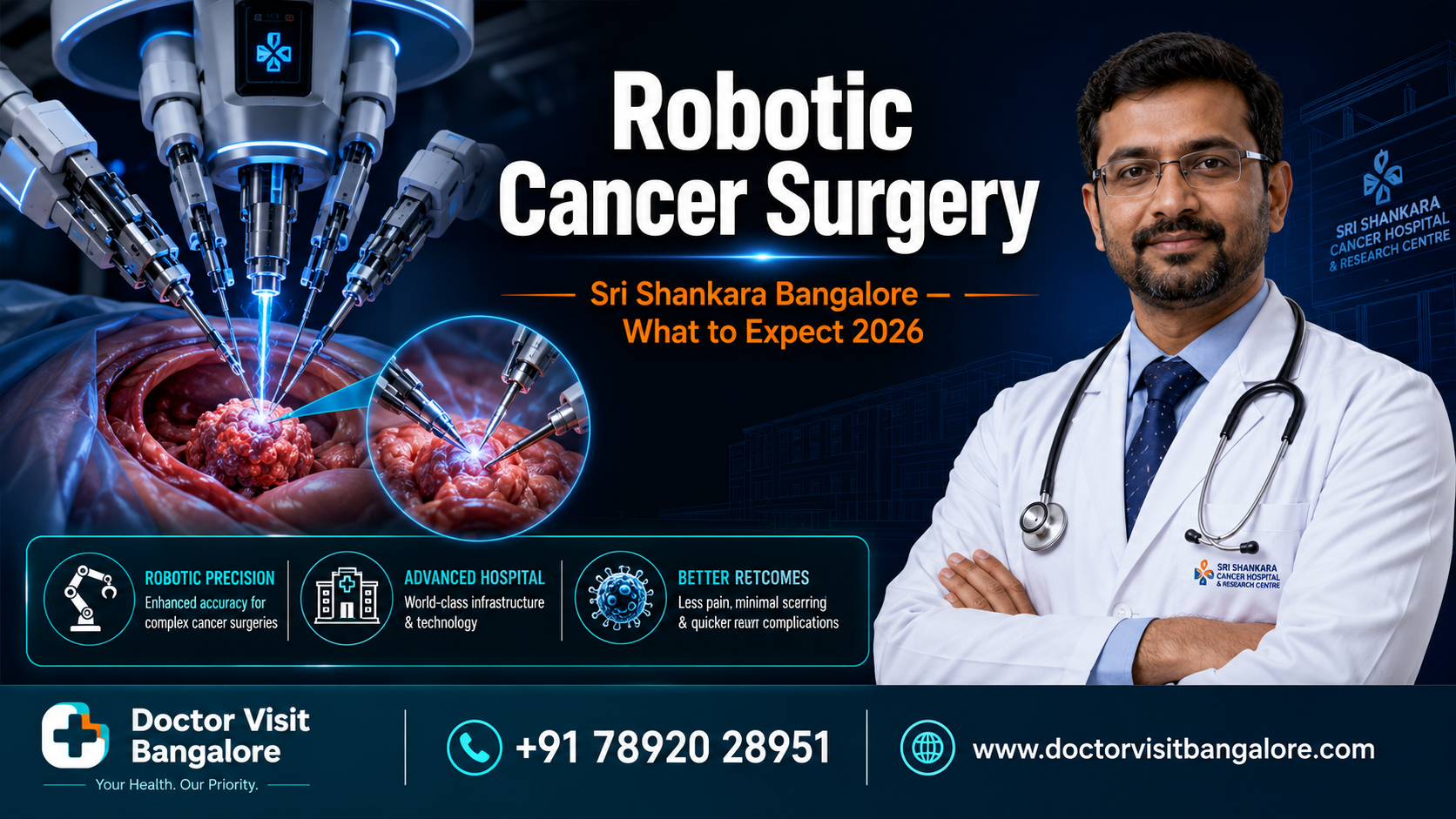
Sri Shankara Cancer Hospital Bangalore has performed 658 robotic cancer surgery procedures since 2021 — making it one of India’s fastest-growing robotic oncology centres. This is everything you need to know before, during, and after robotic cancer surgery at SSCHRC.
📋 Table of Contents
- What Is Robotic Cancer Surgery?
- Sri Shankara’s Robotic Surgery Programme
- How Robotic Surgery Works — Step by Step
- Which Cancers Are Treated Robotically at Sri Shankara?
- Benefits Over Conventional Surgery
- Robotic vs Laparoscopic vs Open Surgery
- What to Expect — Before, During & After
- Robotic Surgery Cost at Sri Shankara Bangalore
- The Surgical Team
- Am I Eligible for Robotic Surgery?
- Frequently Asked Questions
Robotic cancer surgery at Sri Shankara Cancer Hospital Bangalore represents a major leap forward in how cancer is treated in South India. At Sri Shankara Cancer Hospital Bangalore, robotic surgery is not a new or experimental offering — it is a well-established, nationally recognised programme with 658 procedures completed in just the first two years since the system’s installation. The hospital is now considered a training centre for robotic oncology in India.
1. What Is Robotic Cancer Surgery at Sri Shankara Hospital Bangalore?
Robotic cancer surgery is a form of minimally invasive surgery where a surgeon uses a sophisticated robotic system to perform the operation with far greater precision, control, and dexterity than is possible with traditional open surgery or even standard laparoscopic techniques.
The surgeon sits at a console — a few feet away from the operating table — and controls robotic arms that hold miniaturised instruments and a high-definition 3D camera. Every movement the surgeon makes is translated into precise, scaled, tremor-free movements of the robotic instruments inside the patient’s body.
This technique was developed over decades in the USA and Europe and has been standard of care for many cancer surgeries in top global centres for over 15 years. India’s best cancer hospitals — including Sri Shankara Cancer Hospital Bangalore — now offer this technology at a fraction of the cost charged in Western countries.
2. Sri Shankara’s Robotic Surgery Programme
Sri Shankara Cancer Hospital & Research Centre (SSCHRC) in Basavanagudi, Bengaluru, launched its robotic surgery programme after significant investment in infrastructure, training, and specialist recruitment. The results have been remarkable.
What Makes SSCHRC’s Robotic Programme Nationally Recognised?
- 658 robotic procedures in just two years since installation — a very high volume for a dedicated cancer hospital
- Now formally recognised as a training centre for robotic oncology — surgeons from across India come here to learn
- Performed on complex and rare cancers including surgeries in delicate anatomical regions where precision is critical
- Led by nationally recognised surgical oncologists trained in high-volume robotic oncology centres
- Integrated with SSCHRC’s comprehensive tumour boards and multidisciplinary oncology team
“With robotic surgery, we offer not just better margins — but better mornings after surgery.” — Sri Shankara Cancer Hospitals
3. How Robotic Surgery Works — Step by Step
Understanding what actually happens during robotic cancer surgery can reduce anxiety and help patients ask the right questions during their consultation. Here is exactly how a robotic procedure at Sri Shankara unfolds:
Pre-Surgery Assessment & Tumour Board Review
Your case is reviewed by a multidisciplinary tumour board at SSCHRC — including surgical, medical, and radiation oncologists. They decide collectively whether robotic surgery is the optimal approach for your specific cancer, stage, and anatomy.
Anaesthesia & Patient Positioning
You are placed under general anaesthesia. The surgical team positions your body to give optimal access to the tumour site. Small incisions (typically 8–12mm each) are made — far smaller than the long cuts used in open surgery.
Robotic Arms Are Docked
The robotic system’s arms are positioned over the patient and inserted through the small incisions. One arm carries a 3D high-definition camera. The others carry surgical instruments — scissors, graspers, cauterising tools — all miniaturised for precision work inside the body.
Surgeon Takes the Console
The lead surgeon sits at the surgical console — a few metres from the table. Looking into the 3D viewer, they see a magnified, crystal-clear view of the surgical field. Hand and finger movements are translated into precise robotic arm movements with tremor filtering.
Tumour Is Removed with Millimetre Precision
The surgeon dissects, removes, or reconstructs tissue with precision impossible in open surgery. The robotic wrist joints can rotate 360° — far exceeding the human wrist’s range. Margins are checked in real time. Bleeding is minimised through precise cauterisation.
Closure & Recovery Begins
Instruments are removed, the small incisions are closed with a stitch or two, and you are moved to the recovery ward. Because the incisions are tiny, pain is significantly lower and recovery begins almost immediately.
4. Which Cancers Are Treated Robotically at Sri Shankara?
Sri Shankara’s robotic oncology team performs procedures across multiple cancer types. The programme is led by surgical oncologists specialising in uro-oncology, gynaec-oncology, colorectal, and thoracic cancers.
Uro-Oncology
- Prostate cancer (radical prostatectomy)
- Kidney cancer (partial/radical nephrectomy)
- Bladder cancer (cystectomy)
- Adrenal tumours
- Ureteral tumours
Gynaecological Oncology
- Cervical cancer (radical hysterectomy)
- Endometrial/uterine cancer
- Ovarian cancer staging
- Pelvic lymph node dissection
- Vaginal reconstruction
Colorectal & GI Oncology
- Rectal cancer (low anterior resection)
- Colon cancer resection
- Esophageal malignancies
- Gastric tumours
- Liver resections (select cases)
Head, Neck & Thoracic
- Select head and neck tumours
- Thyroid cancer (select cases)
- Thoracic malignancies
- Mediastinal tumours
- Lung resections (select cases)
5. Benefits of Robotic Surgery Over Conventional Cancer Surgery
The clinical advantages of robotic surgery at Sri Shankara Cancer Hospital Bangalore are well documented through the hospital’s own patient outcomes and global published evidence:
🎯 Surgical Precision
- Millimetre-level accuracy
- 3D magnified vision up to 10x
- 360° instrument rotation
- Tremor elimination
- Better tumour margin control
🩹 Faster Recovery
- Significantly less post-op pain
- Smaller incisions (8–12mm)
- Lower blood loss
- Shorter hospital stay
- Earlier return to daily activity
🛡️ Fewer Complications
- Reduced infection risk
- Less scarring
- Fewer blood transfusions
- Lower risk of hernia
- Better nerve preservation
🔬 Better Oncological Outcomes
- Cleaner surgical margins
- More precise lymph node removal
- Organ-preserving options
- Complex anatomy navigation
- Less tumour disruption
“Because the future of surgery is here — and it’s minimally invasive, maximally effective.” — SSCHRC Official Brochure
6. Robotic Surgery vs Laparoscopic vs Open Cancer Surgery
Patients are often confused about the differences between these three surgical approaches. Here is a clear comparison:
| Feature | Robotic Surgery | Laparoscopic Surgery | Open Surgery |
|---|---|---|---|
| Incision size | Very small (8–12mm) | Small (5–15mm) | Large (10–30cm) |
| Surgeon’s view | 3D magnified HD | 2D standard | Direct naked eye |
| Instrument movement | Full 360° wristed | Limited pivot motion | Full natural hand |
| Tremor filtering | ✅ Yes | ❌ No | ❌ No |
| Blood loss | Minimal | Low | Higher |
| Hospital stay | 1–3 days typically | 2–4 days typically | 5–10 days typically |
| Pain level | Low | Low–Moderate | High |
| Recovery time | 2–4 weeks | 3–5 weeks | 6–10 weeks |
| Complex anatomy | Excellent | Limited | Good |
| Cost | Higher | Moderate | Lower |
| Best for | Deep, delicate, complex tumours | Many standard resections | Very large tumours, emergencies |
7. What to Expect — Before, During & After Robotic Surgery at Sri Shankara
Before Surgery
- Consultation & imaging: Your surgeon will review your CT/MRI/PET scans and biopsy reports to plan the procedure precisely
- Tumour board review: SSCHRC’s multidisciplinary team validates the surgical plan
- Pre-anaesthesia assessment: Blood tests, ECG, chest X-ray, and a meeting with the anaesthesiologist
- Bowel preparation: Required for colorectal procedures — your nurse will guide you
- Fasting: No food or water for 6–8 hours before surgery
- Admission: Usually the day before or the morning of surgery
During Surgery
- Duration: typically 2–5 hours depending on cancer type and complexity
- You are completely under general anaesthesia — you will feel and remember nothing
- A dedicated surgical team of 4–6 people is in the theatre throughout
- The lead surgeon is at the robotic console; an assistant surgeon is at the bedside
- Frozen section analysis may be done intraoperatively to check surgical margins in real time
After Surgery — Recovery
- Day 1: Recovery ward, pain management, first sips of water
- Day 1–2: Most patients sit up, some walk short distances with support
- Day 2–3: Light diet starts, catheter removed in many cases
- Day 3–5: Most robotic surgery patients are discharged
- Week 2–4: Return to light activity at home
- Week 4–6: Most patients resume normal daily life
- Follow-up: Pathology report review, post-op OPD visit, and further treatment planning if required
8. Robotic Surgery Cost at Sri Shankara Cancer Hospital Bangalore
One of the most important advantages of choosing robotic cancer surgery at Sri Shankara Cancer Hospital Bangalore is the cost. SSCHRC maintains treatment tariffs approximately 50% lower than corporate cancer hospital averages in Bangalore — making robotic surgery genuinely accessible to a much wider range of patients.
| Procedure | Approx. Cost at SSCHRC (INR) | Approx. Cost (USD) |
|---|---|---|
| Robotic Prostatectomy (Prostate Cancer) | ₹3.5 – ₹6 lakh | $4,200 – $7,200 |
| Robotic Radical Cystectomy (Bladder) | ₹4 – ₹7 lakh | $4,800 – $8,400 |
| Robotic Partial Nephrectomy (Kidney) | ₹3 – ₹5.5 lakh | $3,600 – $6,600 |
| Robotic Radical Hysterectomy (Cervical) | ₹3 – ₹5 lakh | $3,600 – $6,000 |
| Robotic Low Anterior Resection (Rectal) | ₹4 – ₹6.5 lakh | $4,800 – $7,800 |
| Robotic Colectomy (Colon Cancer) | ₹3.5 – ₹6 lakh | $4,200 – $7,200 |
| Robotic Esophagectomy | ₹5 – ₹8 lakh | $6,000 – $9,600 |
*Costs are estimates and vary by cancer stage, surgical complexity, duration, room category, anaesthesia, and post-op care required. Final cost given after surgical consultation. Financial aid available for eligible patients.
How Does This Compare to Other Hospitals?
| Hospital | Robotic Surgery Cost Range | Notes |
|---|---|---|
| Sri Shankara (SSCHRC) | ₹3 – ₹8 lakh | Most affordable; dedicated cancer hospital |
| HCG Cancer Centre | ₹4 – ₹10 lakh | Dedicated cancer; slightly higher |
| Manipal Hospitals | ₹5 – ₹12 lakh | Multi-specialty; premium pricing |
| Apollo Hospitals | ₹6 – ₹14 lakh | Premium brand; highest cost |
| USA / UK equivalent | ₹40 – ₹120 lakh | 20–30x more expensive |
9. The Robotic Surgery Team at Sri Shankara
Robotic surgery at SSCHRC is performed by a team of nationally recognised surgical oncologists who have been specifically trained in high-volume robotic oncology centres across India and internationally. The programme is not operated by general surgeons — it is led by cancer surgery specialists.
Lead Surgeons
- Dr. B.S. Srinath — Founder, 50+ years surgical oncology
- Dr. Raghunath S.K. — Uro-Oncology, 32 years experience
- Dr. Prashanth Hungund — 27 years, 99% recommended
- Dr. Prakash Ramachandra — 35 years experience
Supporting Team
- Dedicated robotic surgery nurses
- Specialised scrub technicians
- Onco-anaesthesiologists
- Intraoperative pathology support
Post-Op Care Team
- Oncology physiotherapists
- Clinical nutritionists/dietitians
- Psycho-oncology counsellors
- Dedicated ICU specialists
10. Am I Eligible for Robotic Cancer Surgery?
Not every cancer patient is automatically a candidate for robotic surgery. Eligibility depends on several clinical factors assessed during your consultation at SSCHRC:
✅ Generally Good Candidates
- Early to moderate stage cancers
- Localised tumours not invading major vessels
- Prostate, kidney, bladder cancers
- Cervical and uterine cancers
- Rectal cancers in narrow pelvis
- Patients with good general health
⚠️ May Need Open Surgery Instead
- Very large or bulky tumours
- Tumours invading adjacent organs widely
- Previous multiple abdominal surgeries (adhesions)
- Emergency oncological situations
- Severe cardiopulmonary conditions
- Metastatic disease (usually systemic treatment)
The decision is always made by the SSCHRC tumour board after reviewing your complete imaging, biopsy, and clinical status. There is no one-size-fits-all answer — which is why the consultation is essential before any decision is made.
🔗 Related Pages on Doctor Visit Bangalore
11. Frequently Asked Questions
Ready to Explore Robotic Surgery at Sri Shankara?
Doctor Visit Bangalore connects cancer patients with the right surgical oncologist at SSCHRC — appointments, report review, cost guidance, all free.
📞 Call +91 78920 28951 💬 WhatsApp NowSources: Official Shankara Cancer Hospitals brochure (2026), on-site visit by Doctor Visit Bangalore (June 2026), www.shankaracancerhospitals.org. This page follows the Doctor Visit Bangalore Editorial Policy.

Arman Ali is the founder of Doctor Visit Bangalore, a trusted healthcare navigation platform helping patients find verified doctors, hospitals, and specialists across Bangalore and all over in India. With hands-on experience in healthcare research and patient assistance, Arman has personally helped hundreds of domestic and international patients connect with leading hospitals including Apollo, Manipal, Fortis, and Aster. His content is grounded in real hospital data, treatment cost research, and direct coordination with medical professionals across Bangalore. He specializes in medical tourism guidance, treatment cost transparency, and specialist discovery for complex conditions including cancer, cardiac surgery, and orthopedic care.
Pingback: Bone Marrow Transplant Cost in Bangalore — Affordable Guide: Sri Shankara vs Other Hospitals 2026
Pingback: Rectal Cancer Treatment in Bangalore — Best Surgery Guide 2026
Pingback: WHO Cancer Report 2026: Cancer Will Affect 92% Worldwide