
Medical Tourism in India: Why the World Is Choosing India for Treatment
From Bangladesh to Uzbekistan, Kenya to Iraq, patients from over 78 countries travel to India every year for world-class treatment at a fraction of Western costs. Here’s why India has become the planet’s fastest-growing medical value travel destination — and how Doctor Visit Bangalore helps you navigate it, from first consultation to your flight home.
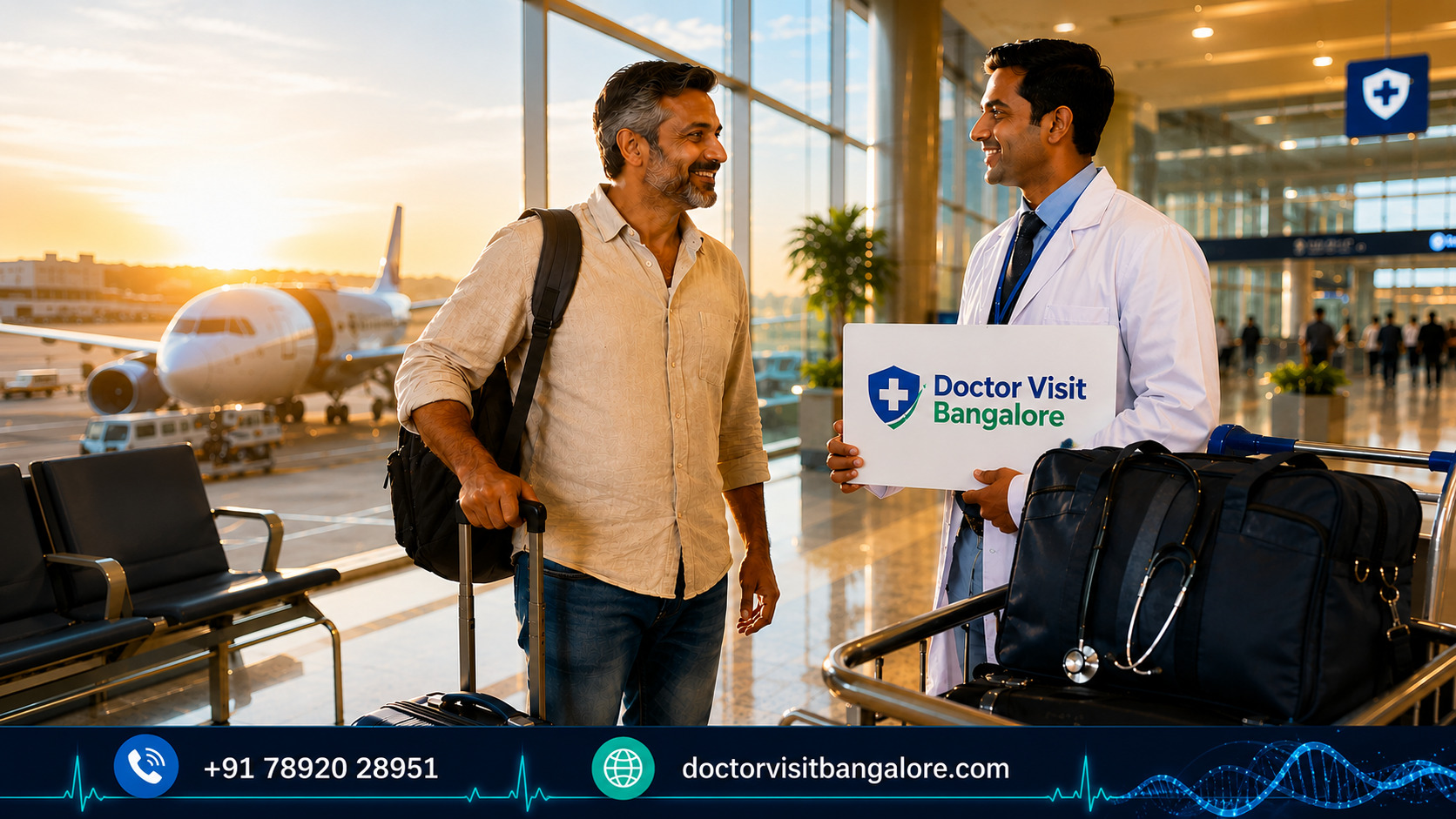
India has quietly become one of the world’s most trusted destinations for serious medical treatment. It isn’t a new trend — it’s the result of decades of investment in hospitals, doctors, and technology, now backed by the government’s own ‘Heal in India’ initiative, a national strategy positioning the country as a global hub for medical value travel. According to the Ministry of Tourism, India issued over 4.8 lakh medical visas in 2024 alone, and the country’s medical tourism market is projected to grow from roughly USD 18.2 billion in 2025 to USD 58.2 billion by 2035.
This guide walks through exactly why patients are choosing India, which countries send the most patients and for what treatments, how much you can expect to save, which hospital hubs specialize in what, and — step by step — how the medical visa process actually works. And throughout, we’ll show you where Doctor Visit Bangalore fits in: as your free, independent guide through all of it.
Why Patients Choose India for Medical Treatment
India’s rise as a medical value travel hub rests on a genuinely rare combination: clinical quality that rivals the West, prices that are a fraction of it, and a healthcare workforce large enough to support both. Here’s what’s actually driving the numbers.
Thinking about coming to India for treatment?
Send us your diagnosis or medical reports on WhatsApp. We’ll match you with the right hospital and specialist for your specific condition and budget, and give you an honest cost estimate — free, usually within a few hours.
Top 20 Countries Sending Medical Tourists to India
Based on medical visa volumes over the past six years, these are the countries that trust India most with their healthcare — led overwhelmingly by South Asia, the Middle East, and East Africa.
Source: Ministry of Tourism / Press Information Bureau, and Ministry of Home Affairs visa issuance data. Bangladesh alone accounts for roughly half of all medical visa arrivals to India.
All 78 Countries India Serves for Medical Value Travel
Beyond the top 20, India’s medical tourism reach spans nearly every region on earth. Here is the complete list of designated source nations, grouped by geography and ranked by volume within each region.
Highest VolumeSouth Asian & SAARC Nations
2nd Largest Individual MarketMiddle East & West Asia
Highest Volume CorridorEast & East-Central Africa
Growing MarketWest, Central & Southern Africa
Fastest-GrowingCIS & Central Asia
EmergingSoutheast Asia
Cost & Waitlist TravelersWestern & Developed Nations
Regional groupings compiled from Ministry of Tourism / PIB visa data and IBEF’s Medical Value Travel sector reporting. Volumes vary widely within each region — Bangladesh, Iraq, and Somalia are the single highest-volume countries in their respective clusters, while Western nations generally send smaller numbers seeking high-end elective procedures like dental reconstruction, cosmetic surgery, and bariatric treatment at 60–80% lower cost.
Regional Patient Corridors — Who Comes, and Why
Each region sends patients to India for a slightly different reason, shaped by what’s unavailable or unaffordable back home.
🇧🇩 Bangladesh — South Asian Corridor
India’s single largest source marketBangladeshi patients represent the highest volume of medical travelers to India by a wide margin, most commonly seeking:
- Oncology — chemotherapy, radiation therapy, and complex tumor removal
- Cardiology — bypass surgery (CABG) and angioplasty
- Gastroenterology — liver transplants and hepatobiliary surgery
🇮🇶 Iraq & the Gulf — Middle East Corridor
India’s second-largest individual source marketIraq, alongside Oman, Yemen, and Saudi Arabia, sends a steady flow of patients seeking:
- Orthopedics — knee and hip replacements, spinal reconstruction
- Pediatric care — congenital heart defect repair, pediatric oncology
- Neurosurgery — brain tumor removal, deep brain stimulation
🇺🇿 Uzbekistan & Central Asia — CIS Corridor
India’s fastest-growing medical travel corridorUzbekistan and Turkmenistan lead a rapidly expanding Central Asian patient base, most often for:
- Hematology — bone marrow transplants for leukemia and thalassemia
- Organ transplants — living-donor kidney transplants
- Neurology — epilepsy management and stroke rehabilitation
🇰🇪 Kenya & Nigeria — African Corridor
Driven by limited local tertiary careEast and West African patients travel to India largely due to a shortage of specialist infrastructure at home, seeking:
- Oncology — CyberKnife radiotherapy, bone marrow transplants
- Cardiology — pediatric heart surgery, valve replacement
- Spine and joint care — minimally invasive spine surgery, joint reconstruction
What Patients From Your Region Are Actually Asking
The right hospital often depends less on your diagnosis alone and more on where you’re travelling from — the logistics, community support, and even cultural fit differ by corridor. Here’s what patients from our biggest source regions ask us most.
Why do Bangladeshi patients specifically choose Bangalore over Delhi or Chennai?
While Delhi-NCR handles the largest overall share of Bangladeshi medical travelers, Bangalore draws a steady flow specifically for its cardiac programs at Narayana Health and Apollo, and its strong oncology infrastructure at HCG — often at a lower total cost of stay than Delhi or Mumbai. For patients who’ve already exhausted options in Kolkata or Dhaka’s private hospitals, Bangalore offers a genuine step up in specialist depth without the price premium of India’s other major metros.
What does the actual process look like for a patient travelling from Oman?
Omani patients typically start with a teleconsultation using existing diagnostic reports, receive a treatment plan and cost estimate from the hospital, then apply for the e-Medical Visa (Oman is among the 171 eligible countries) once the Visa Invitation Letter is issued — a process that usually takes about a week end-to-end. Oman’s flight connectivity to Bengaluru and other Indian hubs is strong, with several direct and one-stop routes, making it one of the more logistically straightforward Gulf corridors for medical travel.
Which Indian hospitals have the most experience treating Iraqi patients?
Delhi-NCR hospitals see the highest volume of Iraqi patients overall, particularly for orthopedic and pediatric surgery, but Bangalore’s Fortis and Apollo also have established international patient teams experienced with Arabic-speaking coordination and halal food arrangements. Iraq is India’s second-largest individual source market by volume, so hospitals across most major hubs — not just Delhi — have meaningful, repeat experience with Iraqi patients and their specific documentation needs.
Is Bangalore a strong choice specifically for African cancer patients?
Yes — Bangalore’s HCG Cancer Hospitals is India’s largest dedicated cancer-only network, and its international patient service has particular depth working with patients from Kenya, Nigeria, and Ethiopia, where advanced oncology infrastructure at home is often limited. Beyond HCG, Aster CMI’s HALAL certification and Manipal’s broader oncology programs give African patients real choice across price points, rather than a single option.
Where in India do UK patients most commonly go, and for what?
UK patients traveling to India are typically seeking elective procedures with long NHS waiting lists — dental reconstruction, cosmetic surgery, bariatric surgery, and joint replacement — and gravitate toward Delhi-NCR and Bangalore for their JCI-accredited private hospitals and strong English-language service. Given the UK’s NHS elective wait times, which the OECD has flagged as running from several weeks to over a year for some specialties, the appeal for UK patients is often as much about speed as it is about cost.
Why has Central Asia become such a fast-growing corridor specifically for bone marrow transplants?
Uzbekistan and Turkmenistan send a rapidly growing number of patients for bone marrow transplants because thalassemia and certain leukemias are notably more prevalent in Central Asian populations, while domestic transplant infrastructure in the region remains limited. India’s high transplant volumes — particularly at Bangalore’s Narayana Health and HCG — combined with costs around $15,000–$23,000 against $250,000+ in the US, make it one of the few realistic options for families facing this diagnosis.
What should a Maldivian patient expect for cost and travel time to Bangalore?
Bangalore is a short flight from Malé — typically under three hours — making it one of the most convenient Indian hubs for Maldivian patients, who send a meaningful share of their medical travelers to India each year given Maldives’ own limited tertiary care capacity across its scattered islands. Total package costs vary by procedure just as with any other patient, but the short flight time meaningfully reduces the travel burden and cost compared to reaching Delhi or Mumbai.
Why do Nigerian patients specifically choose Bangalore’s private hospitals?
Nigerian patients are among the more established international patient groups at Bangalore’s Fortis and Apollo hospitals, both of which have years of documented experience treating patients from Nigeria for cardiac surgery, urology, and organ transplants, plus dedicated international patient desks used to Nigerian-specific visa and payment logistics. Bangalore’s private hospital tier generally offers a stronger balance of specialist depth and predictable pricing than some competing hubs, which matters for patients budgeting a fixed treatment fund from abroad.
How developed is the Middle East-to-Bangalore medical travel corridor?
It’s well established — Aster CMI’s HALAL certification, multiple hospitals’ Arabic-language support, and direct flight connectivity between Bangalore and Gulf hubs like Dubai and Doha have made Bangalore a genuine alternative to Delhi or Chennai for Middle Eastern patients. The corridor is particularly strong for cardiac and oncology care, where Bangalore’s Narayana Health and HCG offer both the clinical depth and the cultural accommodations Gulf patients specifically look for.
What does a US patient need to know before flying to India for elective surgery?
Beyond the visa and hospital selection covered elsewhere on this page, US patients specifically should budget extra recovery time before flying home — long-haul flights carry real deep vein thrombosis risk after major surgery, and most Indian surgeons will recommend a minimum recovery window before you’re cleared to fly. It’s also worth confirming with your US insurer in advance whether any portion of overseas treatment is reimbursable, since a small but growing number of American insurance plans now cover medical travel for specific procedures.
Most In-Demand Treatments
These six specialties currently account for the majority of medical tourism cases in India, with several more emerging as strong growth categories.
Currently leading demand
Emerging growth categories
Cost Comparison: India vs. US vs. UK
The savings aren’t a compromise on quality — they reflect lower operational overheads, favorable exchange rates, and the absence of the malpractice-insurance costs baked into Western pricing.
| Procedure | Average Cost — India | Average Cost — USA | Average Cost — UK | Typical Savings |
|---|---|---|---|---|
| Heart Bypass (CABG) | $5,500 – $7,000 | $120,000 – $140,000 | $23,000 – $28,000 | ~75–95% |
| Liver Transplant | $22,000 – $28,000 | $300,000+ | $110,000+ | ~80–90% |
| Knee Replacement (Single) | $3,500 – $5,000 | $35,000 – $50,000 | $13,000 – $16,000 | ~70–85% |
| Bone Marrow Transplant | $15,000 – $23,000 | $250,000+ | $90,000+ | ~85–90% |
| Spine Surgery (Fusion) | $4,500 – $6,500 | $60,000 – $80,000 | $18,000 – $22,000 | ~75–90% |
| IVF (Per Cycle) | $2,500 – $3,500 | $15,000 – $20,000 | $7,000 – $9,000 | ~60–80% |
Indian package pricing typically bundles the procedure, surgeon fees, implants, hospital stay, and standard medication. Figures are general planning estimates — always confirm an exact quote for your specific case.
What Patients Are Actually Asking About Cost
These are the exact questions we hear most from patients doing their own research before reaching out — answered plainly, with real numbers.
How much cheaper is a heart bypass in India than in the US?
A coronary artery bypass graft (CABG) in India typically runs $5,500–$7,000 all-inclusive, against $120,000–$140,000 in the US — meaning you could fly business class, stay a month in recovery, and still spend less than a fifth of the American price. The gap isn’t a quality shortcut either: India performs some of the highest surgical volumes in the world for this exact procedure, at hospitals built specifically around cardiac care.
What does knee replacement actually cost in Bangalore specifically?
Nationally, knee replacement in India averages $3,500–$5,000, but Bangalore’s premium hospitals — Fortis, Sakra, SPARSH — typically price single knee replacements closer to $6,000–$8,000, reflecting the city’s stronger orthopedic reputation and newer implant technology. If budget is tighter, Bangalore also has excellent mid-tier options like Sagar Hospitals that bring costs back down without giving up NABH-accredited quality — this is exactly the kind of trade-off we help patients weigh before booking.
What’s the real cost of a liver transplant in India?
Expect $22,000–$28,000 for a living-donor liver transplant in India, compared to $300,000+ in the US — a saving of roughly 90%. The bigger variable isn’t the country, it’s the donor: living-donor procedures (common in India, where family members frequently donate) are generally faster to schedule than waiting for a deceased-donor match, which can meaningfully shorten your total time away from home.
Where can I get an affordable bone marrow transplant in Bangalore?
Bone marrow transplants in India typically cost $15,000–$23,000 — against $250,000+ in the US — and Bangalore is genuinely one of the best cities in the country for this, thanks to Narayana Health’s high-volume transplant program and HCG’s dedicated oncology infrastructure. This is a procedure where hospital experience matters enormously, so we specifically match BMT patients with centres that have deep case history in their exact condition (leukemia, thalassemia, lymphoma) rather than just the lowest quoted price.
Is it actually worth flying to India just for dental work?
For anything beyond a routine filling, yes — full-mouth reconstruction, implants, and cosmetic dentistry in India typically run 70–80% cheaper than the UK, often making the flight and hotel stay a rounding error against the total savings. Dental implants that cost £2,000–£3,000 each in the UK are commonly available in India for a few hundred dollars, using the same implant brands (Nobel Biocare, Straumann) that UK clinics use.
What costs do medical tourism packages usually leave out?
The procedure quote is rarely the whole story — the costs that catch patients off guard are usually extended recovery stays if healing takes longer than planned, post-discharge medication not included in the initial package, companion visa and accommodation costs for a second attendant, currency conversion and international card fees, and physiotherapy sessions beyond the standard bundle. This is precisely why we push for a detailed, itemized estimate before you travel rather than a single headline number — so nothing shows up as a surprise once you’re already in the hospital.
What does an IVF cycle cost for international patients in Bangalore?
A single IVF cycle in Bangalore typically costs $2,500–$3,500, compared to $15,000–$20,000 in the US — meaning many international patients can afford two or three attempts in India for the price of one back home. Nova Fertility, one of Bangalore’s leading dedicated fertility centres, works specifically with international couples and can advise on realistic success-rate expectations based on age and diagnosis before you commit to travel.
Is robotic spine surgery in India actually cheaper, or does the “robotic” part add a premium?
Standard spine fusion in India runs $4,500–$6,500 against $60,000–$80,000 in the US; robotic-assisted spine surgery typically adds a moderate premium on top of that Indian baseline for the added precision, but even then the total is still a small fraction of the US robotic price. The honest advice here: robotic assistance genuinely improves accuracy for complex spinal cases, but for straightforward fusions it isn’t always necessary — worth discussing directly with your surgeon rather than assuming “robotic” automatically means “better.”
Which Bangalore hospitals offer the most affordable orthopedic care?
For patients prioritizing cost over five-star hospital ambiance, Sagar Hospitals and Hosmat Hospital are Bangalore’s most budget-friendly NABH-accredited options for joint replacement and trauma surgery, typically running noticeably below Apollo or Fortis pricing for comparable procedures. The trade-off is usually less concierge-style service, not lower surgical quality — the surgeons operating at these hospitals are frequently the same specialists who trained at, or still consult for, the premium chains.
Realistically, how much will I save overall?
Across almost every major procedure — cardiac, orthopedic, transplant, or fertility — patients typically save 60–95% compared to the US, and 40–80% compared to the UK, even after factoring in flights, accommodation, and a companion’s travel costs. The exact number depends entirely on your specific diagnosis and chosen hospital tier, which is exactly what we calculate for you, free, before you book anything.
India’s Major Hospital Hubs
Medical value travel in India is anchored around five major hospital hubs, each with a distinct specialty focus.
Delhi-NCR
Handles the highest absolute volume of international patients in the country. Strong in multi-organ transplants, robotic cardiac surgery, complex neurosurgery, and bone marrow transplants.
Chennai
A traditional gateway for patients from East Africa, the Middle East, and Southeast Asia. Known for advanced cardiology, joint replacements, and liver/kidney transplants.
Mumbai
Highest concentration of specialized oncology programs, favored by West Asian and GCC patients. Strong in precision oncology, CyberKnife radiation, and pediatric surgery.
Bengaluru
Renowned for high-volume, tech-driven cardiac care and orthopedic automation — low-cost, high-success bypass surgery, spine surgery, and robotic joint replacement.
Hyderabad
India’s leading destination for advanced gastroenterology and liver care, anchored by one of the world’s largest dedicated gastro-sciences hospitals. Also strong in oncology, robotic surgery, and genomics-based precision medicine, with pricing that’s consistently among the most competitive of the five hubs.
If Bengaluru is your destination, that’s exactly where Doctor Visit Bangalore comes in — we know these hospitals, their specialist teams, and their pricing inside out, and can get you matched with the right one for free.
Why Bangalore Is India’s Preferred Hub for Medical Value Travel
Choosing the right hospital is only half the equation — the city around it matters just as much for a genuinely comfortable recovery. Here’s what specifically sets Bangalore apart from India’s other major medical hubs.
🌤️ The Climate Advantage
How Bangalore’s weather aids faster recoveryUnlike Delhi’s extreme summers and heavy pollution or Mumbai’s relentless humidity, Bangalore holds a moderate, breezy climate almost year-round — a genuinely underrated factor in surgical recovery.
A stable, temperate environment reduces post-operative respiratory stress and makes light outdoor walking realistic soon after discharge — something that meaningfully speeds recovery after joint replacements and cardiac surgery, where early, gentle mobility is part of the prescribed recovery plan.
✈️ World-Class Infrastructure & Mobility
Safety and infrastructure for a stress-free stayKempegowda International Airport offers direct international connectivity along with fast-tracked channels for medical travelers, so arrival itself is rarely a source of stress.
Within the city, well-planned hospital zones, extensive flyovers, and wheelchair-accessible Namma Metro lines keep the airport-hotel-hospital triangle genuinely low-impact — a real consideration for patients moving around shortly after surgery.
👮 Safety, Stability & a Welcoming Culture
A stress-free environment for international familiesBangalore is widely regarded as one of India’s safest major cities for foreign nationals, solo travellers, and women — a genuinely reassuring factor for a family sending someone abroad for major surgery.
A professional, tech-aware police force, close monitoring around hospital zones, and a generally polite, welcoming local population all add up to noticeably less travel anxiety than families often expect before arriving.
🗣️ Seamless English Communication
No language barrier, day to dayAs India’s tech capital, English is widely and comfortably spoken by everyday citizens — cab drivers, hotel staff, and healthcare workers alike — not just senior doctors.
For international patients, this removes the day-to-day friction of translating simple requests or understanding directions, making daily coordination during a multi-week stay far easier than in cities where English fluency drops off outside hospital walls.
🏯 Relaxing Local Sightseeing & Convalescence
Somewhere pleasant to actually recoverRecovery isn’t only about the hospital — it’s also about where an attendant or a recovering patient can spend the weeks around treatment. Bangalore blends lush greenery, gentle history, and modern leisure in a way few Indian cities manage at the same time.
Cubbon Park and Lalbagh Botanical Garden offer beautiful, genuinely flat walking paths ideal for early post-op mobility, Bangalore Palace provides a calm, low-exertion historical outing, and modern malls like Phoenix Marketcity or Brigade Road give attendants an easy, accessible break from hospital routine without venturing far from major treatment centres.
Hidden High-Value Options Worth Knowing About
A few specific, local details that most medical tourism guides forget to mention — but genuinely change the experience.
Elite Med-Hotels & Serviced Apartments
Bangalore has a substantial network of serviced apartments purpose-built for long-term medical stays right next to major hospital clusters in Whitefield, Bannerghatta, and Hebbal — complete with private kitchens for specific dietary needs, wheelchair ramps, and nurse-call buttons, a level of purpose-built comfort that’s genuinely harder to find near hospitals in other Indian cities.
World-Class Wellness & Ayurvedic Spas
Patients can pair advanced allopathic surgery with a stay at a premium wellness centre just outside the city — retreats like Soukya and Shreyas offer luxury, medically-informed post-operative holistic healing that turns a purely clinical recovery into something genuinely restorative.
The Silicon Valley Tech Advantage
Bangalore’s tech-first infrastructure means its hospitals tend to adopt advanced medical technology — Da Vinci robotic surgical systems, CyberKnife radiotherapy, and AI-driven diagnostics — faster than almost anywhere else in the country, a natural extension of the city’s broader identity as India’s innovation hub.
JCI vs. NABH: Understanding Hospital Accreditation
India requires hospitals treating international patients to hold recognized credentials. Here’s what each one actually means.
Joint Commission International (JCI)
The gold standard for global healthcare accreditation, based in the US. Focuses on strict international patient safety goals and clinical care pathways. India has roughly 60+ JCI-accredited hospitals, concentrated in major hubs — most preferred by patients from the US, UK, Europe, and GCC corporate insurers.
National Accreditation Board for Hospitals (NABH)
India’s national benchmark under the Quality Council of India. Focuses on patient rights, infection control, staff qualifications, and statutory compliance. Over 1,400 hospitals hold full NABH accreditation nationwide — the broadest institutional standard and mandatory for hospitals on official medical tourism panels.
What Patients Are Actually Asking About Safety & Trust
Flying abroad for major surgery is a genuinely anxious decision. These are the exact questions we hear most from patients trying to convince themselves it’s safe — answered honestly.
Which hospitals in Bangalore actually hold JCI accreditation?
Bangalore’s JCI-accredited hospitals include Aster CMI, Narayana Health (Narayana Institute of Cardiac Sciences), Apollo Hospitals, Fortis Hospital, and Manipal Hospitals — all part of the roughly 60+ JCI-accredited facilities nationwide. JCI accreditation isn’t a marketing badge a hospital can simply claim; it requires an on-site international audit against strict patient-safety benchmarks, repeated every three years, so a currently JCI-accredited hospital in Bangalore is genuinely held to the same standard as JCI hospitals in the US or Singapore.
Are Indian doctors actually qualified to treat patients from abroad?
Yes — and often more experienced than doctors in smaller Western hospitals, simply due to volume: senior Indian cardiac and transplant surgeons routinely perform in a single year what a comparable Western surgeon might do in five, because of the sheer scale of India’s patient base. Many senior consultants at Bangalore’s top hospitals also trained or held fellowships in the UK, US, or Germany before returning to India, combining international qualifications with far higher hands-on case volume.
Which NABH-certified hospitals in Bangalore handle medical tourism?
Nearly every major private hospital in Bangalore carries NABH certification, including Fortis, Manipal, Sakra World, SPARSH, Ramaiah Memorial, Sagar Hospitals, and BGS Gleneagles — reflecting how deeply this standard has become the baseline expectation, not a differentiator, for serious private healthcare in the city. When comparing hospitals, NABH accreditation should be treated as a minimum bar to clear, with your actual decision resting on the hospital’s specific track record in your condition.
Which Bangalore hospital should I trust with a complex cardiac case?
For high-complexity cardiac surgery, Narayana Health stands out globally — founded by Dr. Devi Prasad Shetty, who has personally performed close to 15,000 cardiac surgeries, the institute handles one of the highest volumes of complex cardiac procedures anywhere in the world. Apollo Hospitals and Fortis are strong alternatives, particularly for patients who also need integrated cancer or transplant care alongside cardiac treatment — the right choice genuinely depends on the specific complexity and comorbidities in your case, which is exactly what we help assess before recommending a hospital.
How reliable are organ transplant outcomes in Indian hospitals?
India’s leading transplant centres report success rates broadly comparable to Western benchmarks for kidney and liver transplants, and Delhi-NCR alone performs over 1,400 organ transplants annually for foreign nationals — a volume that gives surgical teams significant repeat experience with complex, high-stakes procedures. That said, success rates vary meaningfully by hospital, donor type, and the patient’s own health going in, so ask any hospital you’re considering for their specific outcome data for your transplant type rather than relying on national averages alone.
How do I know if a medical tourism facilitator is trustworthy?
Look for facilitators who are transparent about not being owned by, or exclusive to, any single hospital — a facilitator paid on commission by one hospital chain has an obvious incentive to steer you there regardless of fit, which is precisely the conflict of interest Doctor Visit Bangalore is built to avoid. Genuine independence, a free-to-start model, and a willingness to arrange second opinions at a different hospital are far more reliable trust signals than star ratings alone, which can be gamed.
Is Bangalore a safe destination for elderly patients specifically?
Bangalore is genuinely one of India’s more senior-friendly medical tourism cities — its hospitals have well-established geriatric care programs (Manipal Hospitals’ geriatric specialists are a good example), and the city’s climate is notably milder and easier on recovery than Delhi’s extreme summers or Mumbai’s humidity. The bigger safety factor for seniors is usually the quality of post-operative and recovery support rather than the surgery itself, so we specifically check for wheelchair accessibility, attendant accommodation, and physiotherapy availability when matching elderly patients to a hospital.
Are there neurosurgeons in Bangalore with genuine international training?
Yes — Bangalore’s major hospitals, including Manipal, Apollo, and Sakra World, employ neurosurgeons with fellowship training from institutions in the UK, US, and Germany, many of whom also publish in international peer-reviewed journals alongside their clinical practice. Rather than naming individual doctors here (surgical teams and specific consultants shift over time), we verify current doctor availability and credentials directly with the hospital for your exact condition before making any recommendation.
What clinical quality standards actually apply to private hospitals in India?
Private hospitals treating international patients typically operate under a layered standard: NABH or JCI accreditation for overall hospital quality, ISO 9001:2015 certification for governance and management systems, and standardized Standard Operating Procedures (SOPs) covering admission, discharge, hygiene, and post-operative care. The honest caveat is that quality isn’t perfectly uniform across all 1,400+ NABH hospitals in India — accreditation sets a floor, not a ceiling, which is why hospital-specific due diligence still matters more than the credential alone.
How can I personally verify a doctor’s credentials before traveling?
You can check a doctor’s registration directly with the National Medical Commission (NMC) or the relevant State Medical Council, both of which maintain searchable registries of licensed practitioners, and most reputable hospitals also publish their consultants’ qualifications and fellowship history on their own websites. If you’d rather not navigate this alone, send us the doctor’s name and hospital and we’ll verify their credentials and current availability for you before you commit to travel — part of our free coordination service.
The Medical Visa Process, Step by Step
The ‘Heal in India’ initiative is streamlining hospital selection and visa processing into a single digital pipeline. Here’s how it works in practice.
- Hospital selection & treatment plan.
Share your diagnosis and medical reports with a verified, NABH/JCI-accredited hospital (or with us — we’ll do this matching for you, free). You’ll receive a treatment plan, cost estimate, and expected length of stay.
- Visa Invitation Letter (VIL).
Once you accept a treatment estimate, the hospital issues an official Visa Invitation Letter — mandatory for a medical visa. A tourist visa cannot be converted into a medical visa inside India.
- Online e-Medical Visa application.
Apply via the official Indian e-Visa portal, selecting e-Medical Visa (patient) or e-Medical Attendant Visa (up to 2 attendants per patient), and upload your VIL, passport page, and photo.
- Approval & arrival.
Your Electronic Travel Authorisation typically arrives within 48–72 hours. The visa allows triple entry and a stay of up to 60 days from first arrival.
- Extensions, if needed.
If treatment requires longer than 60 days, extensions are processed through the online e-FRRO portal — a cashless, paperless process — typically within 5–7 working days.
Note on vaccinations: travelers arriving from Yellow Fever risk countries (including much of Africa) need a valid International Certificate of Vaccination administered at least 10 days before arrival — arriving without one results in mandatory quarantine. Those from countries with active wild poliovirus (e.g. Afghanistan, Pakistan) need a valid OPV certificate. We can help you check what applies to your specific route.
Confused by the visa paperwork?
Most patients find the Visa Invitation Letter and e-Medical Visa process the most stressful part of planning treatment in India. We coordinate directly with your chosen hospital to get your VIL issued quickly, and walk you through the e-Visa application step by step — at no cost to you.
What Patients Are Actually Asking About Logistics & Travel
Once someone has decided to come to India, the questions shift from “should I” to “how exactly do I do this.” Here’s what patients ask us once they’re ready to plan the trip.
What’s the actual process for applying for an Indian e-Medical Visa?
You apply directly through the official Indian e-Visa portal (indianevisa.gov.in), selecting either e-Medical Visa for yourself or e-Medical Attendant Visa for a travelling companion, then upload your Visa Invitation Letter, passport bio page, and a recent photograph before paying the country-specific processing fee online. The entire application is digital end-to-end — no embassy visit is required for the initial visa, only for extensions handled through a separate portal.
What exactly do I need to show at Indian immigration on arrival?
Immigration officers will want to see your original passport (with at least 6 months’ validity), your printed ETA approval email, the original Visa Invitation Letter from your hospital, copies of your home-country medical records, proof of sufficient funds to cover treatment, and a confirmed return ticket. Attendants travelling with you need their own passport and ETA, plus documentation proving their relationship to you or a declaration letter naming them as your caregiver.
Realistically, how many days should I budget for the whole visa process?
Your Visa Invitation Letter typically takes 24–48 hours once a hospital has reviewed your medical reports, followed by 48–72 hours for e-Medical Visa approval — so most patients can expect to be travel-ready within about a week of first contacting a hospital. Genuine emergencies can move faster, sometimes under 24 hours, through direct coordination between the hospital and the nearest Indian embassy, which is something we can help push through when time is critical.
Do I need to register on the government’s ‘Heal in India’ portal myself?
The national ‘Heal in India’ portal is still being built out as a single-window platform for hospital discovery, treatment planning, and visa tracking, so for now most patients still go directly through a chosen hospital or an independent facilitator rather than a self-service government registration. Once the full portal launches, it’s expected to let you browse accredited hospitals and track your own case status — but until then, working with your hospital’s international patient desk (or with us) gets you the same outcome faster.
How do I extend my stay if my treatment takes longer than expected?
Extensions are handled through the online e-FRRO portal — a fully cashless, paperless process — where you’ll upload your passport, your existing visa page, a treatment summary and extension letter from your hospital, and proof of your current address in India. Approval typically comes through in 5–7 working days, and in most cases you won’t need an in-person office visit unless your case is flagged for an interview.
Can a family member accompany me on a regular tourist visa instead?
No — attendants must travel on a proper e-Medical Attendant Visa, which is linked directly to your Visa Invitation Letter and allows up to 2 attendants per patient. A tourist visa cannot be converted to an attendant visa after arrival, so this needs to be arranged before travel; make sure your hospital explicitly lists your attendant’s name and passport number on the VIL to avoid delays.
Do I really need a Yellow Fever certificate, and what happens if I don’t have one?
If you’re arriving from, or have transited through, a Yellow Fever risk country — this covers most of Africa and parts of South America — you need a valid International Certificate of Vaccination administered at least 10 days before landing in India. Arriving without one, or with a certificate less than 10 days old, results in a mandatory 6-day quarantine at a designated facility with no exceptions, so this is genuinely worth sorting out well before you book flights.
How do I actually get a Visa Invitation Letter from a Bangalore hospital?
Once a Bangalore hospital reviews your diagnosis and accepts you as a patient, their international patient department issues the VIL directly and uploads it to the government’s tracking system, with a copy emailed to you — this typically happens within 24–48 hours of your treatment plan being finalized. If you’re not sure which hospital to approach, this is exactly where we start: we get your reports in front of the right specialist first, so the VIL request that follows is for a hospital that’s actually the right fit.
Will someone actually meet me at the airport if I’m arriving for surgery?
Yes — hospitals with dedicated international patient departments legally arrange free ambulance or private car transfers directly from the arrivals gate to the hospital, provided your flight details are shared with them in advance. This is a detail that’s easy to overlook while focused on the medical side of planning, so we make sure your hospital’s transfer team has your itinerary confirmed before you land, particularly important if you’re arriving in Bangalore straight off a long-haul flight.
Where should I actually stay in Bangalore during treatment or recovery?
It depends heavily on which hospital you’re at — patients treating at Aster CMI (Hebbal) or SPARSH (Yelahanka) are best served staying in North Bangalore near the airport corridor, while those at Apollo or Fortis Bannerghatta Road will find South Bangalore far more convenient for follow-up visits and reduce daily commute fatigue during recovery. Many hospitals also have partnered guesthouses or nearby serviced apartments built specifically for recovering patients and their attendants — we can point you to the right option once your hospital and treatment plan are confirmed.
How Doctor Visit Bangalore Guides You Through It
Medical tourism in India is genuinely excellent — but it’s also complex, with dozens of hospitals, unfamiliar visa rules, and pricing that varies hospital to hospital. That’s the gap we close.
What Patients Are Actually Asking About Facilitators & Aftercare
Deciding whether to plan your own trip or use a facilitator is often the last hurdle before booking. Here’s what patients genuinely want to know before making that call.
What does a medical tourism facilitator actually do, day to day?
A good facilitator reviews your medical reports and matches you to the right hospital and specialist for your specific condition, negotiates or clarifies a transparent cost estimate, coordinates your Visa Invitation Letter and e-Medical Visa application, and arranges the practical logistics — airport transfers, accommodation, interpreter support — that would otherwise fall entirely on you or a family member managing everything long-distance. In short: they’re the layer between “I need surgery” and “I’ve landed at the right hospital with a plan,” which is exactly the gap that causes the most anxiety for first-time medical travelers.
How do I tell a reliable facilitator apart from one just chasing commission?
Ask directly whether they’re paid by a specific hospital for referrals — a facilitator with an undisclosed commission arrangement has every incentive to steer you toward whichever hospital pays them best, regardless of fit for your condition. Look instead for facilitators who work across multiple hospitals, are upfront about being independent, offer to arrange second opinions, and don’t charge the patient anything to start — all of which are the exact standards we hold ourselves to.
Where can I recover after surgery if I’m not ready to fly home yet?
Several Bangalore hospitals — Sakra World and Manipal among them — have dedicated rehabilitation and physiotherapy programs designed for post-surgical recovery, and many also partner with nearby serviced apartments or recovery-focused guesthouses built specifically for international patients who need a few extra weeks before travelling. The right choice depends heavily on your specific procedure — a knee replacement and a cardiac bypass have very different rehab needs — so we match this to your surgery type rather than defaulting to a one-size-fits-all recommendation.
What’s the realistic step-by-step timeline from “I’m considering this” to “I’m on the plane”?
In practice: (1) share your diagnosis and reports for review, (2) receive a hospital recommendation and written cost estimate, (3) confirm the treatment plan and get your Visa Invitation Letter issued, (4) apply for your e-Medical Visa online, (5) book flights and confirm airport transfer with the hospital, and (6) travel, treat, and recover with follow-up care arranged before you leave. Most patients move through steps 1–4 within about a week when working with a facilitator, versus considerably longer when navigating each step independently with an unfamiliar hospital system.
Does using a facilitator actually cost more than planning the trip myself?
Not with Doctor Visit Bangalore specifically — our service is free to the patient, since we’re compensated by referral arrangements with hospitals rather than charging you directly, so you’re not paying extra for the coordination. The bigger risk with planning entirely solo isn’t cost, it’s information: without a facilitator, patients often only discover mid-treatment that they picked a hospital with weaker experience in their specific condition than an equally-priced alternative down the road.
Will I be able to communicate clearly with doctors and staff if English isn’t my first language?
Most senior doctors and hospital administrative staff in Bangalore speak fluent English as standard, since Indian medical education is conducted in English nationwide, but for day-to-day interactions with nursing staff or during detailed consent discussions, several hospitals’ international patient departments provide interpreter support in Arabic, French, and other languages common among their patient base. If your hospital doesn’t have your specific language covered, we can help arrange a professional medical interpreter before you arrive.
What happens to my care after I fly home — am I just on my own?
No — most Indian hospitals with international patient programs offer telemedicine follow-ups for a defined period after discharge, and can coordinate directly with a doctor in your home country if you send us their contact details in advance. For procedures with a higher complication risk, like organ transplants, it’s worth confirming this handover plan explicitly before you travel, not after — we build this into the treatment plan discussion from the start rather than leaving it as an afterthought.
Can I get treatment, accommodation, and transport bundled into one package?
Yes — most Bangalore hospitals catering to international patients offer bundled packages covering the procedure, hospital stay, and often nearby accommodation for an attendant, though the exact inclusions vary significantly by hospital and price tier. Rather than assuming a “package” covers everything, we always get the itemized breakdown in writing before you commit, since this is precisely where the hidden-cost surprises mentioned earlier on this page tend to hide.
Can you actually book my hospital appointment directly, or do I have to do that myself?
Yes — once you’ve decided on a hospital and specialist, we coordinate the appointment booking directly with the hospital’s international patient desk on your behalf, confirming dates around your travel plans and visa timeline. You’re never locked out of the process — you’ll always see the treatment plan and cost estimate before anything is confirmed — but the back-and-forth of scheduling itself is something we handle so you’re not managing multiple time-zone phone calls yourself.
Is there a single resource that covers everything I need before visiting India for treatment?
This page is designed to be exactly that — covering why India has become a leading medical value travel destination, which countries and treatments dominate the numbers, real cost comparisons, hospital hubs, accreditation standards, the full visa process, and now facilitator and aftercare logistics. If anything here still feels unclear for your specific situation, that’s precisely the gap a direct conversation closes — reach out on WhatsApp with your diagnosis and we’ll walk you through whatever this guide couldn’t fully answer.
Legal Protections, Integrated Care, Insurance & Digital Health
Beyond hospitals and visas, the questions that come up once patients are seriously considering India tend to be about safety nets — what happens if something goes wrong, whether insurance actually works here, and how connected the care really is before and after the flight.
Your legal rights as a patient
What happens if I have a problem with a doctor’s conduct or care?
Foreign patients have the same right as Indian citizens to file a formal complaint directly with the National Medical Commission (NMC) against any registered practitioner, which can investigate professional misconduct and take disciplinary action including suspension of a doctor’s license. This isn’t a theoretical right buried in fine print — it’s a functioning regulatory channel, and any hospital’s international patient desk should be able to point you to the correct complaint process if you ever needed to use it.
Can I actually seek compensation if something goes wrong medically?
Yes — international patients hold equal standing under India’s Consumer Protection Act (CPA) to pursue compensation for medical negligence through consumer courts, a legal avenue that exists specifically to give patients recourse without needing to navigate a foreign country’s full civil court system. For Western travelers especially, this is often the single reassurance that matters most before committing to major surgery abroad — the legal safety net is real, not just a marketing claim.
Will I actually understand what I’m signing before a major procedure?
Major JCI and NABH-accredited hospitals provide informed consent documentation in multiple languages, ensuring you genuinely understand your procedure, its risks, and any alternatives before signing — not just a translated summary, but the same depth of disclosure required at accredited hospitals internationally. If your first language isn’t covered by a specific hospital’s standard forms, this is exactly the kind of detail we confirm in advance rather than leaving you to discover it in the pre-op room.
Integrated allopathic + AYUSH care
Can I actually combine Ayurvedic recovery with my cardiac or orthopedic surgery?
Yes, and it’s an increasingly common part of India’s care model — patients recovering from major orthopedic or cardiac procedures frequently pair their allopathic post-op protocol with Ayurvedic rejuvenation therapies, yoga-based rehabilitation, or naturopathy, particularly at hospitals and wellness centres in Kerala and Bangalore that specialize in this integration. The goal isn’t to replace your surgeon’s recovery plan but to run alongside it — easing stiffness, aiding circulation, and supporting a calmer recovery than a purely clinical discharge plan alone.
What exactly is the AYUSH Visa, and do I need one instead of a Medical Visa?
The AYUSH Visa (Class AY-1) is a dedicated visa category the Indian government introduced specifically for foreigners travelling for therapeutic care under traditional Indian medicine systems — Ayurveda, Yoga, Unani, Siddha, and Homeopathy — separate from the standard e-Medical Visa used for allopathic treatment. If your trip is purely wellness-focused (a Panchakarma program, for instance, with no accompanying surgery), the AYUSH Visa is the correct category to apply for, and we can help clarify which visa fits your specific care plan.
Insurance & cross-border payment
Will my international insurance actually work at an Indian hospital?
Increasingly, yes — Bangalore’s major hospital hubs have established cashless treatment arrangements or streamlined reimbursement pipelines with global insurers including Allianz, Cigna, Bupa, and Aetna, though coverage terms vary significantly by policy and provider. Before travelling, it’s worth getting written pre-authorization from your insurer for the specific procedure, since a “yes, we work with your insurer” from a hospital doesn’t automatically mean your particular policy covers the treatment you need.
Can my home government actually sponsor my treatment in India?
In some cases, yes — India has government-to-government arrangements with several countries across East Africa and the Middle East, under which public sector employees and citizens can be sponsored for tertiary care unavailable locally, sometimes covering the full treatment cost through bilateral health agreements. These arrangements are typically administered through your home country’s health ministry rather than something you can apply for directly, so if you suspect your government has such a program, that’s the first place to check before assuming you’ll be paying entirely out of pocket.
Digital health & telemedicine continuity
Can I actually speak to my surgeon before I book flights, or do I just have to trust a written estimate?
Yes — most hospitals with international patient programs now offer secure telehealth consultations, letting you discuss your diagnosis, treatment plan, and realistic expectations directly with your Bangalore surgeon before committing to travel. This single step resolves the majority of pre-arrival anxiety patients describe, since a 20-minute video call with the actual doctor tends to build more genuine confidence than any written treatment plan alone — and we can help set this consultation up as part of our free coordination.
How does follow-up care actually stay connected once I’ve flown home?
Beyond simple telemedicine check-ins, some hospitals now coordinate remote monitoring and even sync relevant prescription and follow-up data with your local pharmacy or physician, so your care doesn’t just end at discharge and restart from zero back home. This is a genuinely newer capability that varies by hospital rather than a universal standard yet, which is why we specifically confirm what post-discharge digital continuity your chosen hospital actually offers before you travel, rather than assuming it’s included.
Final Word
India’s rise as a global medical tourism destination isn’t a marketing story — it’s backed by real numbers: 60+ JCI-accredited hospitals, 1,400+ NABH-accredited hospitals, a 10th-place global ranking in the Medical Tourism Index, and roughly 2 million international patients treated every year. For patients from Bangladesh, Iraq, Kenya, Uzbekistan, and dozens of other countries, India now offers a genuine alternative to years-long waitlists or unaffordable bills back home.
But “which hospital” and “which doctor” are still deeply personal questions, and getting them right matters more than any statistic on this page. That’s the piece we handle — matching your specific diagnosis to the right specialist, at the right hospital, at a price you can actually plan around.
If you’re considering treatment in India — whether it’s a routine consultation or a complex transplant — reach out to us first. Tell us your situation, share your reports, ask your questions. We will help you find the right path forward — at no cost.
The right information, at the right time, changes everything.
Medical Disclaimer: Doctor Visit Bangalore is an independent healthcare information platform and international patient coordination service. It does not represent or promote any specific hospital. Medical advice, diagnosis, treatment recommendations, and clinical decisions are provided solely by the treating doctor and hospital team. This page is for educational and informational purposes only. Outcomes cannot be guaranteed. Treatment suitability, cost, and clinical protocol must be assessed and confirmed directly with the treating hospital and medical team. This page follows the Doctor Visit Bangalore Editorial Policy. Last updated July 2026. Cost figures are approximate reference ranges for 2026 and subject to change without notice.
Frequently Asked Questions
Q.Why do so many patients from Bangladesh come to India for treatment?
Proximity, affordability, and a lack of advanced tertiary care for conditions like cancer and complex cardiac disease back home. Bangladesh alone accounts for roughly half of all medical visa arrivals to India — the highest of any single country.
Q.Is Indian healthcare actually as good as Western healthcare?
For accredited hospitals, yes. India has over 60 JCI-accredited hospitals meeting the same international patient safety standards used in the US and Europe, plus 1,400+ NABH-accredited facilities meeting rigorous national standards.
Q.How much can I really save by getting treated in India?
Typically 60–95% depending on the procedure. A heart bypass that costs $120,000+ in the US can cost $5,500–$7,000 in India; a knee replacement that costs $35,000+ in the US can cost $3,500–$5,000 in India.
Q.What is the ‘Heal in India’ initiative?
It’s the Indian government’s national strategy, led by the Ministry of Tourism and Ministry of Health and Family Welfare, to position India as a global hub for medical value travel — including a dedicated digital portal, streamlined visas, and hospital accreditation frameworks.
Q.Do I need a medical visa, or can I travel on a tourist visa?
You need a proper e-Medical Visa. A tourist or business visa cannot legally be converted into a medical visa once you’re inside India, so this needs to be arranged before you travel.
Q.How long does the medical visa process take?
The Visa Invitation Letter typically takes 24–48 hours after your hospital reviews your reports, and the e-Medical Visa approval usually follows within 48–72 hours after that. Emergency cases can be processed in under 24 hours through direct hospital-embassy coordination.
Q.Can I bring a family member with me?
Yes — the e-Medical Attendant Visa allows up to 2 attendants per patient, provided they’re named on the hospital’s Visa Invitation Letter.
Q.Do I need any vaccinations before traveling to India?
If you’re arriving from a Yellow Fever risk country (much of Africa and parts of South America), you need a valid vaccination certificate administered at least 10 days before arrival, or you’ll face mandatory quarantine. Travelers from countries with active polio transmission need a valid OPV certificate.
Q.Which Indian city should I choose for treatment?
It depends on your condition — Delhi-NCR for transplants and complex neurosurgery, Chennai for cardiology and liver/kidney transplants, Mumbai for oncology, Bengaluru for cardiac and orthopedic care, and Hyderabad for gastroenterology, liver disease, and genomics-based precision medicine. We can help you decide based on your specific diagnosis.
Q.Is Ayurveda a legitimate option alongside modern treatment?
Yes. India integrates AYUSH systems (Ayurveda, Yoga, Unani, Siddha, Homeopathy) with modern medicine, and the government now issues a dedicated AYUSH visa for wellness travelers seeking these therapies specifically.
Q.How do I get started with Doctor Visit Bangalore?
WhatsApp us at +91 78920 28951 with your diagnosis or medical reports. We’ll review your case, recommend the right hospital and doctor, and send a written cost estimate — usually within 24 hours, completely free.
Sources: KPMG in India & FHRAI, “Heal in India: Catalysing Medical and Wellness Tourism for a Healthier Global Future” (2026); Ministry of Tourism / Press Information Bureau, “Medical Tourism in India” (Aug 2025); Ministry of Home Affairs visa issuance data.
Ready to Explore Treatment in India?
Whether you’re weighing your options or ready to book, we’ll review your case and recommend the right hospital and doctor — for free. We’ve helped patients from Nigeria, Kenya, Ethiopia, the UAE, Saudi Arabia, Bangladesh, and across India find the right care.
📧 Info@doctorvisitbangalore.com · 🌐 www.doctorvisitbangalore.com