
She thought she was just getting old.
For three years, she woke up exhausted no matter how much she slept. She gained weight even though she barely ate. Her hair fell out in clumps every time she combed it. Her skin became dry. She was cold even on warm Bangalore afternoons. Her mind felt like it was moving through wet concrete.
She told herself it was stress. Her doctor told her it was stress. Her family told her it was stress.
Then one routine blood test — a simple TSH test that costs less than ₹300 — changed everything.
Her thyroid was barely functioning. Had been barely functioning for three years. And nobody had thought to check.
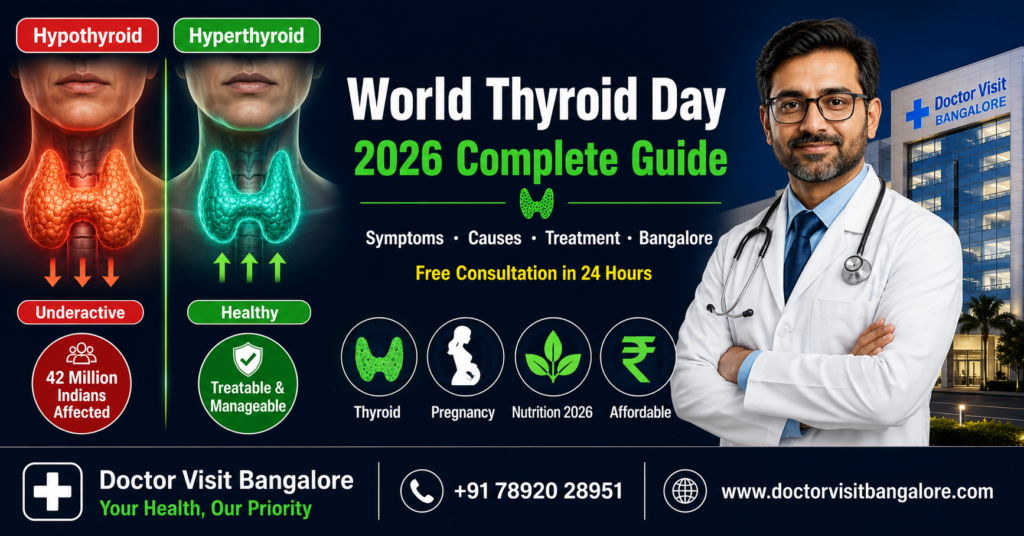
She is one of 42 million Indians currently living with a thyroid disorder. And she is one of the lucky ones — because she finally found out.
Today is World Thyroid Day — May 25, 2026. The single day in the year dedicated to the condition that is silently affecting one in every ten Indians — and being mistaken for stress, ageing, depression, or laziness by almost all of them.
This guide covers everything. What your thyroid actually does, what goes wrong and why, every symptom you should never ignore, the new 2026 research that every pregnant woman in India must read, what to eat and avoid, and exactly how to get the right help in Bangalore — today.
What Is World Thyroid Day 2026?
World Thyroid Day is observed every year on May 25 — initiated by the European Thyroid Association and the American Thyroid Association in 2008, now recognised by healthcare institutions and patient organisations in over 100 countries.
The purpose is simple: to make people aware of a condition that is extremely common, easily diagnosed, and very treatable — yet consistently goes undetected for years because its symptoms are dismissed as something else.
The 2026 Theme: “Thyroid and Nutrition”
This year’s World Thyroid Day theme is officially declared as “Thyroid and Nutrition” by the Thyroid Federation International. The focus is on the direct connection between what you eat and how your thyroid functions.
Iodine, selenium, and zinc — three nutrients that most Indians do not think about — play a critical role in producing thyroid hormones. Deficiencies in these nutrients are one of the most common and preventable causes of thyroid dysfunction in India.
The theme is especially relevant in 2026 because urban Indian diets are changing rapidly — more packaged food, less fresh produce, more processed ingredients that actively interfere with thyroid function. The food you eat every day is either helping or harming your thyroid. Most people have no idea which.
A second theme that many global health institutions have adopted for 2026 is “Closing the Gap Between Symptom Onset and Timely Diagnosis” — because the average Indian patient waits two to three years after symptoms begin before getting a thyroid test. That gap is what this guide is trying to close.
What Is the Thyroid Gland? (Explained Simply)
Your thyroid is a small, butterfly-shaped gland sitting at the base of your neck — just below where you would feel your Adam’s apple. You can fit it in the palm of your hand. It weighs about 25 grams.
Despite its tiny size, it controls more of your body than almost any other organ.
The thyroid’s job is to produce two key hormones — thyroxine (T4) and triiodothyronine (T3). These hormones travel through your bloodstream and reach virtually every cell in your body. They regulate:
- How fast your metabolism runs — how quickly you burn calories
- Your heart rate and how hard your heart works
- Your body temperature — why you feel warm or cold
- Your energy levels — how tired or alert you feel
- Your brain function — how clearly you think and remember
- Your muscle strength
- Your hair and skin health
- Your digestive speed
- Your mood and emotional regulation
- Your menstrual cycle and fertility
When your thyroid produces the right amount of hormones — everything runs smoothly. You feel energetic, your weight is stable, your mind is clear, your hair grows normally, and your mood is balanced.
When your thyroid produces too little or too much — everything goes wrong. At the same time. In ways that are easy to miss because they overlap with dozens of other conditions.
This is why thyroid disease is so consistently underdiagnosed. The symptoms are real. But they do not scream “thyroid.” They whisper “stress” and “ageing” and “lifestyle” — until a blood test finally tells the truth.
Why India Has One of the World’s Biggest Thyroid Problems
India’s thyroid burden is one of the largest in the world — and it is getting worse.
42 million Indians currently live with thyroid disorders. Thyroid disease is now the second most common endocrine disorder in India after diabetes. And unlike diabetes, it receives a fraction of the awareness.
Several specific factors make India particularly vulnerable:
Iodine deficiency remains widespread. Despite the introduction of iodised salt, iodine deficiency persists in many regions of India — particularly in the Himalayan belt, northeastern states, and interior districts where iodised salt does not consistently reach or where traditional salt is still used. Iodine is the essential building block of thyroid hormones. Without adequate iodine, the thyroid cannot produce hormones and enlarges in an attempt to compensate — causing goitre.
Selenium deficiency in Indian soil. Selenium is a mineral that protects the thyroid from oxidative damage and helps convert T4 to the more active T3 hormone. Much of India’s agricultural soil is selenium-depleted. People eating food grown in these regions get insufficient selenium in their diet — increasing susceptibility to autoimmune thyroid conditions like Hashimoto’s thyroiditis.
Urban diet changes. The rapid shift from traditional Indian diets — rich in vegetables, legumes, and whole grains — to urban diets dominated by packaged food, instant noodles, processed snacks, and excessive soy is creating thyroid disruption in ways that researchers are only beginning to fully understand. Several compounds in packaged foods — including artificial flavours, preservatives, and colourants — are suspected endocrine disruptors that interfere with thyroid hormone production.
High rates of undiagnosed autoimmune disease. Hashimoto’s thyroiditis — an autoimmune condition where the body attacks its own thyroid gland — is the most common cause of hypothyroidism in India today. It develops silently over years before causing noticeable symptoms. Most patients with Hashimoto’s are not diagnosed until significant thyroid damage has already occurred.
Women bear the greatest burden. In India, women are five to eight times more likely to develop thyroid disorders than men. Given that millions of Indian women are in their reproductive years — when thyroid health directly impacts pregnancy, fetal development, and infant health — the scale of undiagnosed thyroid disease in Indian women represents a significant public health crisis.
Types of Thyroid Disorders — Know Each One
Thyroid disease is not one condition. It is a family of related disorders, each with different causes, symptoms, and treatments.
Hypothyroidism — underactive thyroid. The gland produces too little hormone. Everything in your body slows down. The most common thyroid disorder in India.
Hyperthyroidism — overactive thyroid. The gland produces too much hormone. Everything speeds up — heart, metabolism, nervous system.
Hashimoto’s Thyroiditis — an autoimmune condition. The immune system mistakenly attacks the thyroid gland, gradually destroying its ability to produce hormones. The most common cause of hypothyroidism in India.
Graves’ Disease — an autoimmune condition. The immune system produces antibodies that stimulate the thyroid to produce too much hormone. The most common cause of hyperthyroidism.
Goitre — an enlarged thyroid gland. Can occur with hypothyroidism, hyperthyroidism, or normal thyroid function. Often caused by iodine deficiency.
Thyroid Nodules — lumps that form within the thyroid gland. Most are benign. Some require monitoring or biopsy to rule out cancer.
Thyroid Cancer — malignant growth in the thyroid gland. Generally highly treatable when detected early, with excellent survival rates compared to most other cancers.
Postpartum Thyroiditis — thyroid inflammation after pregnancy. Often temporary but can lead to permanent hypothyroidism.
Hypothyroidism — Symptoms, Causes, What It Feels Like
Hypothyroidism is the most common thyroid disorder in India. It occurs when your thyroid does not produce enough hormone — causing your entire body to slow down.
What causes it:
- Hashimoto’s thyroiditis (autoimmune attack on the thyroid) — most common cause
- Iodine deficiency
- Previous thyroid surgery or radioactive iodine treatment
- Certain medications — lithium, amiodarone, some cancer therapies
- Radiation treatment to the neck area
- Congenital hypothyroidism — some babies are born with it
What it feels like — the complete symptom list:
Energy and body:
- Constant, overwhelming fatigue — no amount of sleep feels like enough
- Unexplained weight gain despite no change in diet
- Feeling cold all the time — even when others are comfortable
- Slow heart rate
- High blood pressure
- Puffy face — particularly around the eyes, especially in the morning
- Swollen hands and feet
Brain and mood:
- Difficulty concentrating — the “brain fog” that makes thinking feel effortful
- Memory problems — forgetting words, names, recent events
- Depression — a grey, flat feeling that does not lift
- Slowed thinking and speech
- Difficulty making decisions
Skin, hair, nails:
- Dry, rough, flaky skin
- Hair loss — diffuse thinning across the scalp rather than patches
- Dry, brittle nails that break easily
- Loss of the outer third of the eyebrows — one of the most specific signs
Digestive:
- Constipation — often severe and long-standing
- Loss of appetite despite weight gain
Reproductive:
- Irregular periods — heavier, longer, more frequent
- Fertility problems
- Increased risk of miscarriage when untreated
The insidious thing about hypothyroidism is that it develops so gradually that most people adapt to feeling worse and worse — normalising their fatigue, weight gain, and brain fog until a test finally reveals the cause.
Hyperthyroidism — Symptoms, Causes, What It Feels Like
Hyperthyroidism is the opposite — your thyroid produces too much hormone. Instead of slowing down, your body speeds up — sometimes to frightening speeds.
What causes it:
- Graves’ disease (autoimmune overstimulation) — most common cause
- Toxic multinodular goitre — multiple nodules independently producing hormones
- Thyroid adenoma — a single nodule producing excess hormone
- Excessive iodine intake
- Excess thyroid hormone medication
- Thyroiditis — temporary overproduction during thyroid inflammation
What it feels like — the complete symptom list:
Energy and body:
- Unexplained weight loss despite increased appetite
- Heart palpitations — feeling your heart pounding, racing, or fluttering
- Rapid or irregular heartbeat — sometimes severe enough to cause atrial fibrillation
- Trembling hands — a fine tremor most obvious when hands are outstretched
- Excessive sweating — even in cool environments
- Heat intolerance — feeling uncomfortably hot when others are comfortable
- Muscle weakness — particularly in the thighs and upper arms
Brain and mood:
- Anxiety and nervousness — a persistent, physical sense of agitation
- Irritability
- Difficulty sleeping
- Hyperactivity — difficulty sitting still
Eyes (particularly in Graves’ disease):
- Bulging, wide eyes
- Eye irritation, redness, excessive tearing
- Double vision
- Light sensitivity
Digestive:
- Frequent bowel movements or diarrhoea
- Nausea
Reproductive:
- Irregular or absent periods
- Reduced fertility
Severe untreated hyperthyroidism can cause a thyroid storm — a life-threatening emergency involving extremely rapid heart rate, high fever, and confusion. This requires immediate hospitalisation.
Hashimoto’s Thyroiditis — India’s Most Common Thyroid Condition
Hashimoto’s is an autoimmune condition where your immune system — normally designed to protect you — mistakenly identifies your own thyroid cells as foreign invaders and attacks them.
Over months and years, this immune attack gradually destroys the thyroid’s ability to produce hormones, leading eventually to hypothyroidism.
What makes Hashimoto’s particularly difficult is that the early stages often cause no symptoms at all. The thyroid can compensate for the immune damage for a long time before hormone levels drop enough to cause noticeable effects. By the time most patients are diagnosed, significant thyroid tissue has already been lost.
Who gets Hashimoto’s: Hashimoto’s is far more common in women than men — up to 10 times more common. It often runs in families. It is associated with other autoimmune conditions including Type 1 diabetes, rheumatoid arthritis, and lupus.
How it is diagnosed: Hashimoto’s is confirmed by a blood test that detects specific antibodies — anti-TPO (thyroid peroxidase antibodies) and anti-thyroglobulin antibodies — that the immune system produces when attacking the thyroid.
Treatment: If Hashimoto’s has progressed to hypothyroidism, daily thyroid hormone replacement medication (levothyroxine) is prescribed. If thyroid function is still normal despite the presence of antibodies, regular monitoring is recommended.
Selenium supplementation has shown promise in reducing thyroid antibody levels in some studies — making the 2026 theme of “Thyroid and Nutrition” directly relevant to Hashimoto’s patients.
Graves’ Disease — The Overactive Autoimmune Thyroid
Graves’ disease is an autoimmune condition in which the immune system produces specific antibodies — called thyroid-stimulating immunoglobulins — that bind to thyroid receptors and constantly stimulate hormone production.
Unlike normal thyroid regulation, where hormone production is carefully controlled, Graves’ disease gives the thyroid a constant, uncontrolled signal to keep making more hormones. The result is persistent hyperthyroidism.
Graves’ disease is also the most common cause of the eye condition called Graves’ ophthalmopathy — where the tissue around the eyes becomes inflamed and swollen, pushing the eyeballs forward. This occurs in some patients with Graves’ disease and can range from mild irritation to significant vision problems.
Treatment options for Graves’ disease:
- Anti-thyroid medications — carbimazole or propylthiouracil — block hormone production
- Radioactive iodine therapy — destroys overactive thyroid cells
- Surgery — partial or total thyroidectomy
All three approaches have different advantages, side effects, and long-term implications. The choice is made based on the patient’s age, the severity of hyperthyroidism, pregnancy status, and personal preference — always in consultation with an endocrinologist.
Thyroid Nodules and Thyroid Cancer
Thyroid nodules are lumps that form within the thyroid gland. They are extremely common — detected in up to 65% of adults when sensitive ultrasound is used. The vast majority are completely benign and cause no symptoms.
Most thyroid nodules are discovered incidentally — during a neck examination for something else, or on an imaging scan done for another reason.
A small percentage of nodules are malignant. This is why any newly discovered thyroid nodule deserves evaluation — not alarm, but evaluation.
When a nodule needs attention:
- Nodule larger than 1 cm
- Nodule that is solid rather than fluid-filled (cystic)
- Rapidly growing nodule
- Nodule with suspicious features on ultrasound
- Associated enlarged lymph nodes in the neck
Thyroid cancer is one of the most treatable cancers when detected early. The most common type — papillary thyroid cancer — has a five-year survival rate exceeding 98% when treated appropriately. Surgery to remove the thyroid (thyroidectomy), often followed by radioactive iodine treatment, is the standard approach.
The key message is simple: finding a lump in your neck does not mean cancer. But it does mean getting it checked — quickly and calmly.
Thyroid and Nutrition — The 2026 Theme Explained
The 2026 World Thyroid Day theme — “Thyroid and Nutrition” — is not a vague wellness slogan. It is a specific, science-grounded statement about how directly what you eat determines how well your thyroid functions.
Three nutrients stand at the centre of this relationship:
Iodine — the essential building block Without iodine, your thyroid cannot produce hormones. It is not optional — it is a structural requirement. Every molecule of T3 and T4 contains iodine atoms. Your body cannot make iodine. It must come from your diet.
Iodine deficiency is still the leading preventable cause of thyroid dysfunction worldwide. In India, iodised salt was introduced to address this — but its reach is inconsistent, and many urban households have shifted to non-iodised rock salt or Himalayan salt, which contains very little iodine.
Selenium — the thyroid’s protective shield Selenium is a trace mineral that serves two critical functions for thyroid health. First, it is needed to convert the inactive thyroid hormone T4 into the active T3 that your cells can use. Second, it protects the thyroid gland itself from the oxidative damage that occurs as a byproduct of hormone production. A thyroid gland that is chronically selenium-deficient ages faster, becomes more vulnerable to autoimmune attack, and functions less efficiently.
Zinc — the hormone activator Zinc is required for the thyroid hormone receptor to function properly — meaning that even if your thyroid produces adequate hormones, zinc deficiency can prevent your cells from responding to them correctly. Zinc is also needed for TSH production by the pituitary gland.
The nutritional connection to thyroid health is why 2026 marks such an important shift in how the medical community is approaching thyroid care — moving from purely pharmaceutical management toward recognising that the food choices of 1.4 billion Indians are directly shaping the thyroid health crisis in this country.
Best Indian Foods for Your Thyroid
The good news is that traditional Indian food — when eaten in its unprocessed, whole form — contains many of the nutrients your thyroid needs.
For iodine:
- Seafood and fish — some of the richest iodine sources. Particularly relevant for coastal Karnataka and Tamil Nadu
- Iodised salt — use it consistently. One teaspoon of properly iodised salt provides most of your daily iodine requirement
- Dairy products — milk, curd, and paneer contain moderate amounts of iodine
- Eggs — particularly the yolk
For selenium:
- Brazil nuts — extraordinarily selenium-rich. Just two Brazil nuts per day can meet your entire selenium requirement
- Sunflower seeds — widely available and affordable
- Eggs — a good selenium source as well as iodine
- Brown rice — contains more selenium than polished white rice
- Chicken and fish — moderate selenium sources
- Mushrooms — particularly shiitake and button mushrooms
For zinc:
- Pumpkin seeds (kaddu ke beej) — one of the richest plant sources of zinc
- Lentils and legumes — dal eaten daily provides meaningful zinc intake
- Chickpeas (chana) — a staple Indian food and excellent zinc source
- Sesame seeds (til) — used in many Indian recipes and snacks
- Whole grains — especially wheat and bajra
General thyroid-supportive eating:
- Eat freshly cooked food more than packaged or processed food
- Choose whole grains over refined grains
- Include fresh vegetables and fruit daily
- Cook with iodised salt consistently
- Include a small amount of nuts and seeds daily
Foods That Harm Your Thyroid — What to Avoid
Not all foods are thyroid-friendly. Some compounds found in common Indian foods can interfere with thyroid hormone production — particularly when eaten in large quantities or in raw form.
Goitrogenic foods — eat cooked, not raw
Goitrogens are compounds that interfere with iodine absorption and thyroid hormone production. They are found in:
- Cabbage (band gobhi)
- Cauliflower (phool gobhi)
- Broccoli
- Brussels sprouts
- Radish (mooli)
- Mustard greens (sarson)
- Kale
Important: Cooking these vegetables significantly reduces their goitrogenic compounds. Eating cooked cabbage or cauliflower as part of a balanced diet is perfectly fine for most thyroid patients. The concern arises mainly when eating large quantities raw — like raw cabbage juice or raw cruciferous vegetable smoothies that have become trendy in urban India.
Soy in excess
Soy is widely consumed in India in the form of soy milk, soy protein supplements, and tofu. Soy contains isoflavones that can interfere with thyroid hormone absorption and production, particularly in people with iodine deficiency. People taking thyroid medication should take it at least four hours apart from soy consumption.
Packaged food with artificial additives
Times of India reported on May 23, 2026 that artificial flavours and additives in packaged foods — including bisphenol A (BPA), phthalates, parabens, artificial sweeteners, and artificial food colours like tartrazine and erythrosine — are suspected endocrine disruptors. These chemicals can interfere with the hormonal system, including thyroid function, in ways that researchers are still actively investigating.
For thyroid patients, reducing packaged food consumption is one of the most practical dietary interventions available.
Excessive coffee and green tea immediately before thyroid medication
Both can interfere with levothyroxine absorption when consumed immediately after taking the medication. Take thyroid medication on an empty stomach with plain water, and wait at least 30 minutes before coffee or tea.
BREAKING — Thyroid in Pregnancy: The Autism Risk Every Indian Mother Must Know
This is the most important section in this article for pregnant women or women planning to become pregnant.
A landmark study published in The Journal of Clinical Endocrinology and Metabolism — which has been making headlines on World Thyroid Day 2026 — has revealed a deeply important finding about the connection between thyroid health during pregnancy and a child’s neurodevelopment.
What the study found:
Researchers tracked more than 51,000 births and studied the relationship between maternal thyroid hormone levels during pregnancy and autism spectrum disorder (ASD) diagnoses in children.
The findings were clear and significant: mothers who had persistent thyroid hormone imbalance across multiple trimesters of pregnancy were at a substantially increased risk of having children diagnosed with autism spectrum disorder.
The risk was dose-dependent — meaning the longer the thyroid dysfunction persisted across trimesters, the higher the autism risk. When thyroid hormone levels were low during all three trimesters, the odds of an autism diagnosis in the child more than tripled.
The critical finding that brings reassurance:
Women whose thyroid dysfunction was adequately treated — meaning their hormone levels were kept within the normal range throughout pregnancy — did not face significantly increased autism risk. The risk was specifically associated with uncontrolled, persistent thyroid imbalance — not with having thyroid disease per se.
As the lead researcher stated: “While adequately treated chronic thyroid dysfunction was not associated with increased autism risk in offspring, ongoing imbalance across multiple trimesters was. These findings underscore the need for routine monitoring and timely adjustment of therapy to maintain normal thyroid hormone levels throughout pregnancy.”
What this means for Indian pregnant women:
Thyroid dysfunction is among the most common medical conditions complicating pregnancy in India. Many pregnant Indian women are either undiagnosed or undertreated. The new evidence adds urgency to what obstetricians and endocrinologists have long recommended:
Every pregnant woman in India should have her TSH levels tested — ideally in the first trimester. Women with known thyroid disease should have TSH monitoring at every trimester — not just at diagnosis. Thyroid medication doses often need adjustment during pregnancy as hormone requirements change. Women with uncontrolled thyroid levels should speak to their endocrinologist about dose adjustment immediately.
A TSH test costs between ₹150 and ₹300 at any laboratory in Bangalore. A potential impact on your child’s neurodevelopment makes that test one of the most valuable ₹300 any pregnant woman in India can spend.
Thyroid in Women — Why It Hits Women 5–8 Times More
Thyroid disease is, in many ways, a women’s health crisis — and it is consistently under-recognised as one.
Women are five to eight times more likely to develop thyroid disorders than men. The reasons are biological, hormonal, and immune-related — and they intersect with nearly every major stage of a woman’s reproductive life.
The oestrogen-thyroid connection: Oestrogen influences thyroid function directly. Fluctuating oestrogen levels — during the menstrual cycle, during pregnancy, postpartum, during perimenopause, and at menopause — create repeated windows of thyroid vulnerability. Each hormonal transition is a potential trigger for thyroid dysfunction in women with underlying susceptibility.
Autoimmune vulnerability: Women are significantly more likely than men to develop autoimmune conditions in general — and Hashimoto’s thyroiditis and Graves’ disease are both autoimmune. The same biological factors that make women’s immune systems more reactive (which is actually protective in many ways) also make them more prone to the misdirected immune attacks that characterise autoimmune thyroid disease.
Postpartum thyroiditis: Up to 10% of women develop thyroid dysfunction in the year after delivery. Postpartum thyroiditis often begins with a brief period of hyperthyroidism followed by hypothyroidism, and is frequently mistaken for postpartum depression. Many cases resolve spontaneously — but some lead to permanent hypothyroidism.
Fertility and menstrual impact: Untreated hypothyroidism disrupts the menstrual cycle, impairs ovulation, and significantly increases miscarriage risk. Many women who struggle with unexplained infertility or recurrent miscarriage have undiagnosed thyroid disorders. A simple TSH test should be part of every infertility evaluation.
The bottom line: Every woman in India — particularly those between the ages of 20 and 50 — should know her TSH level. It is one of the cheapest, most accessible, and most informative health tests available. A normal result takes two minutes to confirm. An abnormal result can change the course of your health, your pregnancy, and potentially your child’s neurodevelopment.
How Is Thyroid Disease Diagnosed? Tests and Costs in Bangalore
Thyroid diagnosis starts with a blood test. It is simple, fast, and inexpensive.
TSH (Thyroid Stimulating Hormone) — the first test
TSH is the hormone your pituitary gland produces to signal your thyroid to make more hormones. When the thyroid is underactive, TSH rises — the pituitary is trying to stimulate a sluggish gland. When the thyroid is overactive, TSH falls — the pituitary is trying to slow it down.
A single TSH blood test is the standard first step in thyroid diagnosis.
Cost in Bangalore: ₹150 – ₹300 at most pathology labs. Available at all major chains — Manipal Diagnostic Centre, Dr. Lal PathLabs, Thyrocare, SRL Diagnostics.
T3 and T4 tests
If TSH is abnormal, T3 (triiodothyronine) and T4 (thyroxine) levels are tested to understand the extent of dysfunction and confirm the diagnosis.
Cost in Bangalore: ₹200 – ₹400 for each, or as part of a thyroid profile package (TSH + T3 + T4) for ₹400 – ₹700.
Thyroid antibody tests
Anti-TPO antibodies and anti-thyroglobulin antibodies confirm autoimmune thyroid conditions (Hashimoto’s or Graves’ disease).
Cost in Bangalore: ₹500 – ₹1,200 per antibody test.
Thyroid ultrasound
An ultrasound of the thyroid gland shows its size, structure, and the presence of any nodules. It is painless, radiation-free, and takes about 15 minutes.
Cost in Bangalore: ₹500 – ₹1,500 at most radiology centres.
Fine Needle Aspiration Cytology (FNAC)
If a thyroid nodule is found, an FNAC may be recommended — a simple, minimally invasive procedure where a thin needle draws a small sample of cells from the nodule for laboratory analysis.
Cost in Bangalore: ₹1,500 – ₹3,500.
Thyroid Treatment in Bangalore — Complete Guide
The good news about thyroid disease is that in most cases it is highly manageable — often with a single daily tablet.
Hypothyroidism treatment:
The standard treatment is levothyroxine — a synthetic version of the T4 hormone your thyroid should be producing. Taken once daily on an empty stomach, it replaces the missing hormone and normalises all the body systems that were disrupted.
Levothyroxine is one of the most commonly prescribed medications in India. It is inexpensive — as little as ₹10 to ₹30 per month for most doses — and widely available at every pharmacy.
The key to success with levothyroxine is consistency — taking it at the same time every day, on an empty stomach, and returning for regular TSH monitoring (typically every 6 to 12 months once stable, or more frequently during pregnancy or dose adjustment).
Hyperthyroidism treatment:
Three main approaches exist — anti-thyroid medications (carbimazole or propylthiouracil), radioactive iodine therapy, or surgery. Your endocrinologist will recommend the most appropriate approach based on your specific situation.
Hashimoto’s treatment:
If thyroid function is still normal — monitoring and nutritional support. If hypothyroidism has developed — levothyroxine. Selenium supplementation has shown benefit in reducing antibody levels in several studies.
Thyroid cancer treatment:
Surgery to remove the thyroid (thyroidectomy), typically followed by radioactive iodine treatment and long-term thyroid hormone suppression therapy. Outcomes are excellent — thyroid cancer has one of the highest survival rates of any cancer.
Best hospitals for thyroid treatment in Bangalore:
- Manipal Hospitals — endocrinology department at Old Airport Road
- Apollo Hospitals — strong endocrinology and nuclear medicine for radioactive iodine treatment
- Narayana Health — good for thyroid cancer surgery
- HCG — for thyroid cancer and advanced cases
- Fortis Hospital — endocrinology and general thyroid management
When to See an Endocrinologist in Bangalore
See an endocrinologist — not just a general physician — if:
- Your TSH is abnormal and you need a diagnosis and treatment plan
- You have been on levothyroxine for more than a year without TSH review
- You are pregnant or planning pregnancy with a thyroid condition
- You have a thyroid nodule that needs evaluation
- You have symptoms of hyperthyroidism — rapid heartbeat, tremor, weight loss
- You have bulging eyes or eye irritation alongside thyroid symptoms (possible Graves’)
- You have been told you have thyroid antibodies
- Your symptoms persist despite being on thyroid medication
In Bangalore, find an endocrinologist at:
- Apollo Hospitals — Bannerghatta Road
- Manipal Hospitals — Old Airport Road or Whitefield
- Aster CMI Hospital — Sahakar Nagar
- Fortis Hospital — Rajajinagar
- Narayana Health City — Bommasandra
Or WhatsApp us on +91 78920 28951 — we will connect you with a verified endocrinologist in Bangalore who specialises in thyroid disorders, matched to your location and budget. Completely free of charge.
Frequently Asked Questions
Is thyroid disease curable? Hypothyroidism and hyperthyroidism are managed rather than cured in most cases. With proper treatment, however, thyroid patients can live completely normal, healthy lives with no limitation on activity, diet, or pregnancy. Thyroid cancer is often curable when detected early.
What is a normal TSH level? Most laboratories define normal TSH as between 0.4 and 4.0 mIU/L, though optimal ranges during pregnancy are narrower — typically below 2.5 mIU/L in the first trimester. Your doctor will interpret your result in the context of your symptoms and other tests.
Can I stop taking levothyroxine once I feel better? Generally no — not without your doctor’s guidance. Most cases of hypothyroidism are permanent, and stopping medication causes symptoms to return. Do not stop or adjust your dose without medical advice.
Is thyroid disease hereditary? Yes — there is a strong genetic component, particularly for autoimmune thyroid conditions like Hashimoto’s and Graves’ disease. If a close family member has thyroid disease, you have a higher risk. Regular screening is recommended.
Can thyroid disease cause depression? Yes. Hypothyroidism is a well-documented cause of clinical depression. Many patients being treated for depression are actually suffering from undiagnosed hypothyroidism. A TSH test should be part of any initial evaluation for depression.
Should children be tested for thyroid disease? Yes if there is a family history, if the child is showing symptoms (poor growth, fatigue, school performance decline, weight changes), or if the mother had thyroid disease during pregnancy. Congenital hypothyroidism is screened for in hospital births in India.
What is the connection between thyroid and weight? Hypothyroidism slows metabolism, causing weight gain that does not respond normally to diet or exercise. Hyperthyroidism speeds up metabolism, causing weight loss. Treating the thyroid condition normalises metabolism — though it may not cause dramatic weight loss on its own.
How often should I check my thyroid? If you have no symptoms and no family history — every 3 to 5 years after age 35 is reasonable. If you have symptoms, a family history, or are pregnant — get tested promptly. If you are on thyroid medication — follow your doctor’s monitoring schedule, typically every 6 to 12 months.
Final Word
The thyroid is small. The test to check it costs less than a meal at a restaurant. And the treatment, when needed, is simpler than almost any other chronic condition.
And yet — 42 million Indians are walking around today with a thyroid disorder they have not been diagnosed with. Feeling tired, gaining weight, losing hair, struggling to think clearly, battling depression — and being told it is stress. Or ageing. Or just the way things are.
On World Thyroid Day 2026, the message is simple:
Get your TSH tested. Share this guide with every woman you know. Do not ignore symptoms that your body has been sending for months or years.
A ₹300 blood test could be the beginning of getting your life back.
If you need help finding the right endocrinologist, thyroid specialist, or diagnostic centre in Bangalore — Doctor Visit Bangalore is here. We connect you with the right doctor, at the right hospital, completely free.
📞 Call Us Now: +91 78920 28951 💬 WhatsApp Us Now
We respond within minutes.
Sources: Thyroid Federation International | Endocrine Society — Journal of Clinical Endocrinology & Metabolism | Indian Thyroid Society | Max Healthcare World Thyroid Day 2026 | PubMed — Maternal Thyroid Imbalance and ASD Risk (Nov 2025) | ScienceDaily | RGCIRC This article follows the Doctor Visit Bangalore Editorial Policy. All content is originally written, thoroughly researched, and updated regularly.

Arman Ali is the founder of Doctor Visit Bangalore, a trusted healthcare navigation platform helping patients find verified doctors, hospitals, and specialists across Bangalore and all over in India. With hands-on experience in healthcare research and patient assistance, Arman has personally helped hundreds of domestic and international patients connect with leading hospitals including Apollo, Manipal, Fortis, and Aster. His content is grounded in real hospital data, treatment cost research, and direct coordination with medical professionals across Bangalore. He specializes in medical tourism guidance, treatment cost transparency, and specialist discovery for complex conditions including cancer, cardiac surgery, and orthopedic care.