
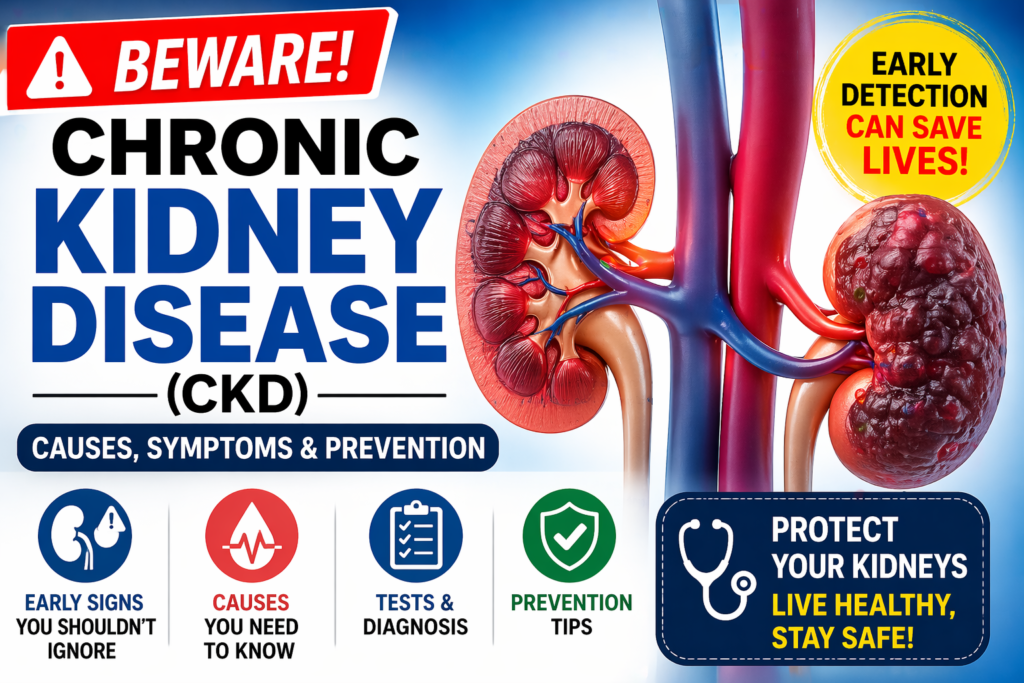
Your kidneys play a crucial role in keeping your body healthy by filtering waste, balancing fluids, and maintaining essential minerals. However, modern lifestyle habits like smoking, alcohol consumption, and lack of physical activity can silently damage these vital organs over time.
Chronic Kidney Disease (CKD) is a serious and long-term condition where the kidneys gradually lose their ability to function properly. If left untreated, it can progress to kidney failure, requiring dialysis or even a transplant.
What is Chronic Kidney Disease (CKD)?
Chronic Kidney Disease refers to a slow and progressive loss of kidney function. In the early stages, symptoms are often mild or completely absent, which makes it difficult to detect without proper testing.
As the condition advances, the kidneys become less effective at removing toxins and excess fluids from the body, leading to serious health complications.
Common Symptoms of Chronic Kidney Disease
In the early stages, symptoms may not be noticeable. However, as kidney function declines, you may experience:
- Persistent itching
- Muscle cramps
- Nausea or vomiting
- Loss of appetite
- Swelling in feet or ankles
- Changes in urination (too much or too little)
- Difficulty breathing
- Poor sleep
Symptoms of Sudden Kidney Failure (Acute)
If kidney function drops suddenly, symptoms may appear quickly, such as:
- Abdominal or lower back pain
- Fever
- Diarrhea
- Skin rashes
- Nosebleeds
- Vomiting
⚠️ These signs require immediate medical attention.
What Causes Chronic Kidney Disease?
CKD can affect anyone, but certain conditions significantly increase the risk:
- Diabetes
- High blood pressure
- Heart disease
- Unhealthy lifestyle habits
- Obesity
- Smoking and alcohol use
These conditions damage the blood vessels in the kidneys, reducing their ability to function properly.
Complications of CKD
When kidneys are not working properly, it affects the entire body. Some common complications include:
- Anemia (low red blood cells)
- Weak bones
- Heart problems
- High potassium levels
- Fluid retention and swelling
Stages of Chronic Kidney Disease
CKD is divided into 5 stages based on how well the kidneys filter waste:
- Stage 1: Mild damage, normal function
- Stage 2: Slight decline in function
- Stage 3: Moderate damage
- Stage 4: Severe damage
- Stage 5: Kidney failure (ESRD)
Best Hospitals for Kidney Treatment in Bangalore
Some well-known hospitals in Bangalore for kidney treatment include:
- Apollo Hospitals
- Fortis Hospitals
- Manipal Hospitals
- Aster CMI Hospital
These hospitals offer advanced nephrology care, dialysis services, and kidney transplant facilities.
Cost of Chronic Kidney Disease Treatment in Bangalore
The cost varies depending on the stage and treatment type:
- Consultation: ₹500 – ₹1500
- Blood Tests: ₹1000 – ₹5000
- Dialysis (per session): ₹2000 – ₹4000
- Kidney Transplant: ₹5 lakh – ₹10 lakh
Costs may differ based on hospital and patient condition.
Best Doctors for Kidney Treatment
Bangalore has experienced nephrologists with expertise in managing CKD, dialysis, and transplants.
When choosing a doctor, consider:
- Experience in nephrology
- Hospital affiliation
- Patient reviews
- Treatment approach
How to Prevent Kidney Disease
Prevention is possible, especially if risk factors are controlled early.
Follow these healthy habits:
- Eat a low-salt and balanced diet
- Exercise regularly (at least 30 minutes daily)
- Maintain a healthy weight
- Avoid smoking and tobacco
- Limit alcohol consumption
- Get regular health check-ups
Managing diabetes and blood pressure is the most important step in preventing kidney damage.
How is CKD Diagnosed?
Since CKD often has no early symptoms, testing is the only reliable way to detect it.
Key tests include:
1. Blood Test (eGFR)
This test measures how well your kidneys filter waste. A lower value may indicate kidney dysfunction.
2. Urine Test
Checks for protein or blood in urine, which can signal kidney problems.
3. Blood Pressure Check
High blood pressure is both a cause and a result of kidney disease.
Treatment Options Available
🔹 Medicines
Used to control blood pressure, diabetes, and symptoms.
🔹 Dialysis
Helps remove waste when kidneys fail.
🔹 Kidney Transplant
Recommended in advanced stages for long-term survival.
When to See a Doctor?
You should consult a doctor if you experience:
- Persistent swelling
- Changes in urination
- Unexplained fatigue
- High blood pressure
Early diagnosis can significantly slow disease progression.
Frequently Asked Questions
What is the early stage of kidney disease?
Early stage CKD may not show symptoms, but blood tests can detect it.
Is dialysis painful?
Dialysis is generally not painful but may cause mild discomfort.
Can CKD be cured?
CKD cannot be completely cured, but it can be managed effectively.
How long can a CKD patient live?
With proper treatment, many patients live long and healthy lives.
Conclusion
Early detection of Chronic Kidney Disease can save lives. Kidney damage is usually permanent, but early detection can slow or stop its progression. By adopting a healthy lifestyle and monitoring your health regularly, you can protect your kidneys and avoid serious complications.
If you are at risk or notice any symptoms, consult a best nephrologist in Bangalore immediately. Early action can make a life-saving difference.
📞 Need Help?
Looking for the best kidney specialist in Bangalore?
👉 Call Now | WhatsApp Now to book a consultation
Disclaimer
This content is created for informational purposes only and should not be considered medical advice. Always consult a qualified doctor for proper diagnosis and treatment. Avoid self-medication and seek professional guidance for any health concerns.

Arman Ali is the founder of Doctor Visit Bangalore, a trusted healthcare navigation platform helping patients find verified doctors, hospitals, and specialists across Bangalore and all over in India. With hands-on experience in healthcare research and patient assistance, Arman has personally helped hundreds of domestic and international patients connect with leading hospitals including Apollo, Manipal, Fortis, and Aster. His content is grounded in real hospital data, treatment cost research, and direct coordination with medical professionals across Bangalore. He specializes in medical tourism guidance, treatment cost transparency, and specialist discovery for complex conditions including cancer, cardiac surgery, and orthopedic care.