
📅 Updated July 2026 🩸 Category: Cancer Treatment Bangalore
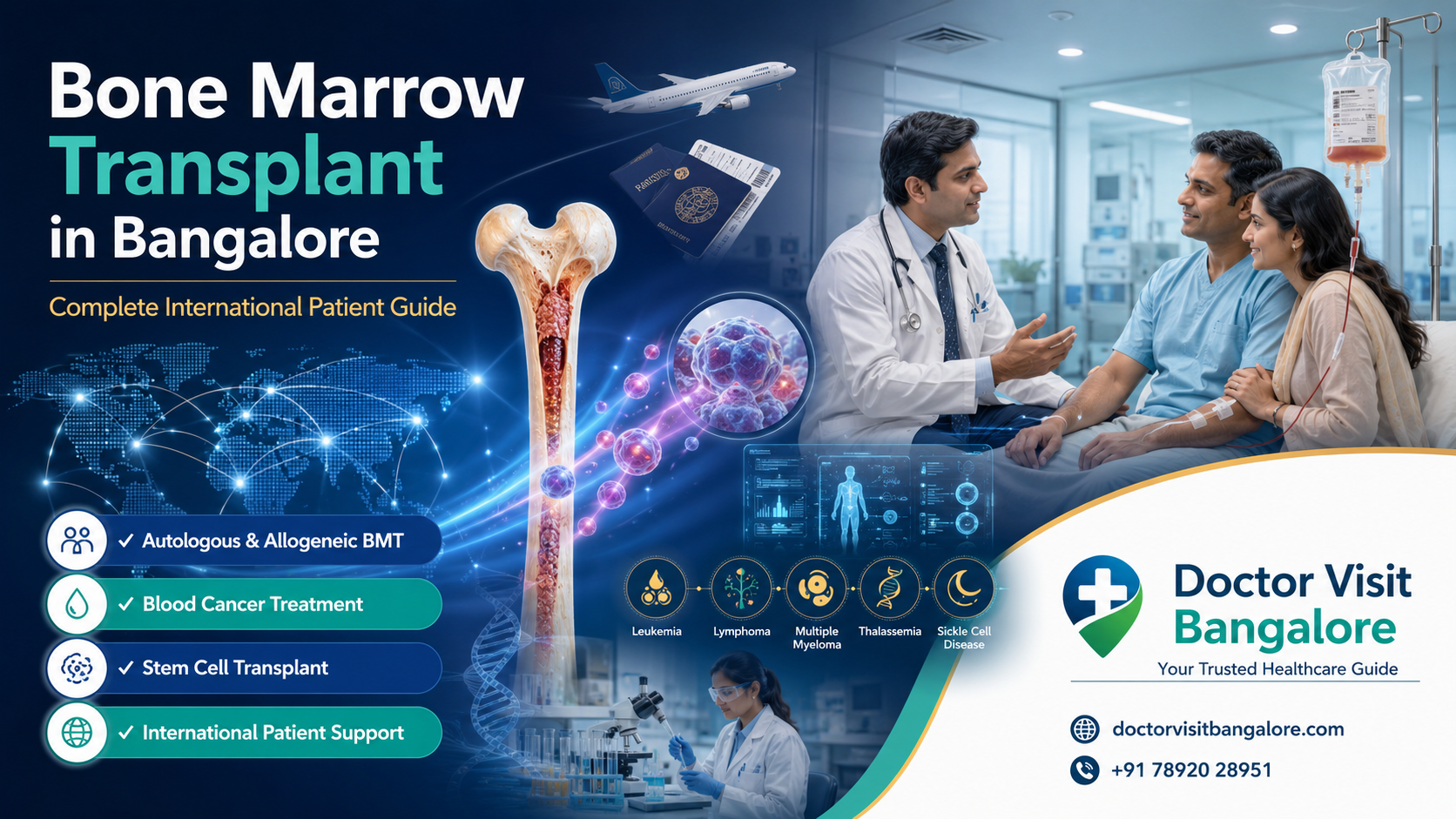
Bone Marrow Transplant in Bangalore — Complete International Patient Guide 2026 by Doctor Visit Bangalore
A Bone Marrow Transplant — also called a Stem Cell Transplant — is one of the most complex and carefully coordinated procedures in modern medicine. It offers a genuine possibility of remission or cure for patients with leukaemia, lymphoma, aplastic anaemia, thalassaemia, and other serious blood disorders. For the right patient, with the right donor, at the right centre, it can be life-changing.
This guide is written to help patients and families understand every stage of the BMT journey — from diagnosis and evaluation through conditioning, transplant, recovery, and long-term follow-up. It is designed to support patients researching treatment options in Bangalore, including those travelling from Bangladesh, Nigeria, Kenya, Tanzania, Ethiopia, the UAE, Saudi Arabia, Oman, Qatar, the UK, the USA, Canada, and Australia.
Doctor Visit Bangalore is an independent healthcare information and patient coordination service. This page does not represent or promote any specific hospital. Its purpose is to educate patients and help them compare options before coordinating the right appointment for their individual needs.
Doctor Visit Bangalore provides independent coordination — appointment booking, hospital comparison, cost estimates, medical visa support. Free service for all patients. Call +91 78920 28951 | WhatsApp Now
📋 Complete Guide — Table of Contents
1. What Is a Bone Marrow Transplant?
A Bone Marrow Transplant is a medical procedure in which diseased, damaged, or destroyed bone marrow is replaced with healthy blood-forming stem cells. These stem cells can come from the patient’s own body, a matched donor, or cord blood. Once infused, the healthy stem cells travel through the bloodstream to the bone marrow, where they begin to produce normal, healthy blood cells — a process called engraftment.
The procedure is used when a person’s bone marrow is no longer capable of producing enough healthy blood cells — either because the disease itself has damaged it (such as in leukaemia or aplastic anaemia), or because the high-dose chemotherapy used to treat the disease has destroyed the marrow as a necessary part of treatment.
BMT is not a single event. It is a process that unfolds over weeks and months — from pre-transplant conditioning through the infusion of stem cells, engraftment, close monitoring, management of complications, and long-term follow-up. Understanding this process in detail is essential for patients and families before committing to a treatment journey that requires careful planning, emotional resilience, and expert medical support.
Key Principle to Understand
A Bone Marrow Transplant is not simply a one-time procedure. It is a comprehensive treatment strategy that requires careful patient selection, expert donor matching, intensive preparation, specialised post-transplant care, and long-term follow-up by an experienced haematology and transplant team. The centre you choose, the team’s experience, and the quality of coordination before and during treatment all influence outcomes significantly.
2. How Bone Marrow Works
Bone marrow is the soft, spongy tissue inside the cavities of large bones — including the hip bones, sternum, and femur. It functions as the body’s blood cell factory, continuously producing three essential types of cells:
Red Blood Cells
Carry oxygen from the lungs to the rest of the body. A deficiency causes anaemia — fatigue, breathlessness, pallor.
White Blood Cells
Form the immune system — protecting against infections. Deficiency causes dangerous susceptibility to bacteria and viruses.
Platelets
Enable blood clotting to prevent excessive bleeding. Deficiency causes bruising and serious bleeding complications.
All three cell types originate from a common ancestor — the haematopoietic stem cell. These stem cells live primarily in the bone marrow and have two unique abilities: self-renewal (producing more stem cells) and differentiation (developing into specialised blood cells). When disease or treatment destroys the stem cell population, the body loses its blood-producing capacity — which is when a transplant may be considered.
3. Stem Cell Sources Explained
The term “Stem Cell Transplant” is increasingly used alongside “Bone Marrow Transplant” because modern procedures often use stem cells collected from sources other than the bone marrow itself. Understanding the different collection sources helps patients engage more meaningfully with the transplant team’s recommendations.
| Source | Where Collected | How Collected | Commonly Used For |
|---|---|---|---|
| Bone Marrow (direct) | Hip bone (iliac crest) | Needle aspiration under general anaesthesia | Some allogeneic cases, paediatric transplants |
| Peripheral Blood Stem Cells (PBSC) | Bloodstream (after G-CSF stimulation) | Apheresis — blood drawn, stem cells separated, blood returned | Most autologous and many allogeneic transplants |
| Cord Blood | Umbilical cord at birth | Collected and stored in cord blood banks | Patients without matched donors, particularly children |
The most commonly used source today is peripheral blood stem cells (PBSC) — collected via apheresis after the donor receives G-CSF, a growth factor that stimulates the marrow to release stem cells into the bloodstream. This is less invasive for the donor and produces faster engraftment than direct marrow harvesting.
4. Types of Bone Marrow Transplant
The type of transplant recommended depends on the patient’s disease, stage, age, fitness, and the availability of a suitable donor. Each type has different characteristics, risks, and clinical indications.
🔁 Autologous BMT
The patient’s own stem cells are collected and stored before high-dose chemotherapy. After chemotherapy destroys the cancer cells and marrow, the stored stem cells are returned to restore marrow function. No rejection risk. No GVHD.
May be considered for: Multiple myeloma, some lymphomas, certain solid tumours.
🧬 Allogeneic BMT
Stem cells from a matched donor are infused into the patient. The new immune system can recognise and help destroy remaining cancer cells — the Graft-versus-Leukaemia (GvL) effect. Higher complexity and GVHD risk than autologous.
May be considered for: Leukaemia (AML, ALL), MDS, aplastic anaemia, thalassaemia.
👨👩👦 Haploidentical BMT
Uses a half-matched donor — typically a parent, child, or sibling. Modern PTCy (post-transplant cyclophosphamide) protocols have made haploidentical transplants increasingly effective. Nearly every patient has a potential haploidentical donor.
May be considered for: Patients without fully matched sibling or unrelated donors.
🍼 Cord Blood Transplant
Stem cells from donated umbilical cord blood stored in public banks. More tolerant of HLA mismatches than other donor sources. Engraftment is typically slower, and cell dose may limit use in larger adults.
May be considered for: Children, smaller adults, ethnic minority patients with limited registry donors.
🌿 Reduced Intensity Conditioning (RIC)
A less intensive preparative regimen used before allogeneic transplant for older patients or those who cannot tolerate standard full-intensity conditioning. Relies more heavily on the GvL effect than on the direct cytotoxic effect of conditioning.
May be considered for: Patients aged 50–70+, those with comorbidities, certain indolent disease subtypes.
| Feature | Autologous | Allogeneic | Haploidentical | Cord Blood | RIC |
|---|---|---|---|---|---|
| Donor Needed | ❌ No | ✅ Yes | ✅ Yes | ✅ Yes | ✅ Yes |
| GVHD Risk | None | Moderate–High | Moderate | Lower | Lower |
| GvL Anti-Cancer Effect | None | Strong | Present | Present | Present |
| Relapse Risk (general) | Higher | Lower | Moderate | Moderate | Moderate |
| Typical Hospital Stay | 2–3 weeks | 4–6 weeks | 4–6 weeks | 5–7 weeks | 3–5 weeks |
5. Diseases Where BMT May Be Considered
BMT is used across a range of blood cancers, non-malignant blood disorders, and immune system diseases. The decision to recommend transplant depends on disease type, stage, response to prior treatment, donor availability, and individual patient fitness — assessed by the treating haematology and transplant team.
🩸 Leukaemia
- Acute Myeloid Leukaemia (AML)
- Acute Lymphoblastic Leukaemia (ALL)
- Chronic Myeloid Leukaemia (CML)
- Chronic Lymphocytic Leukaemia (CLL)
🦴 Lymphoma
- Hodgkin Lymphoma (relapsed/refractory)
- Non-Hodgkin Lymphoma
- Diffuse Large B-Cell Lymphoma (DLBCL)
- Mantle Cell Lymphoma
- T-Cell Lymphoma
🧬 Multiple Myeloma
- Newly diagnosed myeloma
- Relapsed/refractory myeloma
- Amyloidosis (selected cases)
- Plasma cell disorders
💉 Non-Malignant Blood Disorders
- Aplastic Anaemia (severe)
- Thalassaemia Major
- Sickle Cell Disease
- Diamond-Blackfan Anaemia
- Fanconi Anaemia
🔬 Myelodysplastic and Myeloproliferative
- Myelodysplastic Syndrome (MDS)
- Myelofibrosis
- CMML
- JMML (paediatric)
🛡️ Primary Immune Disorders
- Severe Combined Immunodeficiency (SCID)
- Wiskott-Aldrich Syndrome
- Chronic Granulomatous Disease
- Haemophagocytic Lymphohistiocytosis (HLH)
6. Who May Need a Bone Marrow Transplant?
Not every patient with a blood cancer or bone marrow disorder will require a transplant. The recommendation is made by a multidisciplinary team after evaluating multiple factors across the disease, the patient, and the available donors.
📊 Disease Factors
- Disease type and subtype
- Stage and risk category
- Cytogenetic and molecular markers
- Response to chemotherapy
- Relapse history
👤 Patient Factors
- Age and general fitness
- Heart, lung, kidney, liver function
- Prior infections (CMV, hepatitis)
- Nutritional status
- Psychological readiness
🧬 Donor Factors
- Availability of a matched sibling
- Unrelated donor registry search
- HLA match level
- Donor age and health
- CMV status compatibility
A transplant recommendation should not be based on a single consultation. It requires comprehensive evaluation by an experienced haematology and transplant team. If you have received a BMT recommendation, seeking a second opinion from a specialist centre is entirely appropriate and commonly encouraged.
🩸 Need help understanding your BMT options in Bangalore?
Share your diagnosis and reports — we’ll help you compare options. Free service.
7. Pre-Transplant Patient Evaluation
Before a transplant proceeds, a comprehensive workup assesses the patient’s fitness, confirms disease status, and identifies factors requiring special management. This evaluation typically takes 2–4 weeks and is the foundation on which the entire transplant plan is built.
| Test / Assessment | Purpose |
|---|---|
| Complete Blood Count (CBC) | Assess current blood cell counts |
| Bone Marrow Biopsy and Aspiration | Confirm disease status, cellularity, and molecular markers |
| High Resolution HLA Typing | Match patient with potential donors |
| PET-CT / CT Scan | Assess disease extent and remission status |
| Echocardiogram | Assess cardiac function before conditioning |
| Pulmonary Function Tests | Assess lung capacity and function |
| Liver and Kidney Function Tests | Confirm organ fitness for chemotherapy |
| Infectious Disease Screening | Hepatitis B/C, HIV, CMV, EBV, TB |
| Dental Review | Dental infections must be treated before immunosuppression |
| Nutritional Assessment | Optimise nutritional status before transplant |
| Psychological Assessment | Assess mental readiness and support needs |
| Fertility Counselling (where relevant) | Discuss sperm/egg preservation options before conditioning |
8. Donor Matching and HLA Typing
For allogeneic transplants, finding a compatible donor is one of the most critical steps. Compatibility is determined by Human Leukocyte Antigen (HLA) typing — a specialised blood test identifying proteins on white blood cells. The closer the HLA match, the lower the risk of serious complications such as graft rejection and GVHD.
👫 Matched Sibling Donor
Siblings have a 25% chance of being fully HLA-matched. Generally associated with the best outcomes and lowest GVHD risk in allogeneic transplant.
Probability: 25% per sibling
🌍 Matched Unrelated Donor
Found through international registries (DKMS, NMDP, WMDA). With an 8/10–10/10 match, outcomes at experienced centres can approach those of sibling donors.
Registry search: 4–8 weeks typically
👨👩👦 Haploidentical Donor
Parent, child, or sibling with a 50% HLA match. PTCy protocols have significantly improved outcomes. Nearly all patients have a potential haploidentical donor.
Availability: Nearly universal
🍼 Cord Blood
From public cord blood banks. More tolerant of HLA mismatches than adult donors. Slower engraftment. Cell dose may limit use in larger adult patients.
Particularly used in: Children, ethnic minorities
9. Step-by-Step BMT Treatment Journey
Understanding every step helps patients and families plan realistically — emotionally, logistically, and financially. International patients particularly benefit from understanding this timeline before making travel arrangements.
Initial Consultation and Report Review
The haematologist reviews all prior medical records, blood tests, biopsy reports, and imaging. Disease risk stratification is determined and a preliminary treatment strategy is discussed. Doctor Visit Bangalore coordinates this step for international patients before travel.
Pre-Transplant Workup (Weeks 2–4)
Comprehensive evaluation — HLA typing, cardiac, pulmonary, and organ function tests, infectious disease screening, dental clearance, and nutritional assessment. Donor search is initiated simultaneously if allogeneic transplant is planned.
Conditioning Regimen (Days −7 to −1)
High-dose chemotherapy (and sometimes total body irradiation — TBI) is given to destroy remaining cancer cells and suppress the immune system to prevent rejection of the new stem cells. This is one of the most demanding phases — side effects include nausea, mucositis, fatigue, and increased infection susceptibility.
Transplant Day — Stem Cell Infusion (Day 0)
The stem cells are infused through an IV line — similar to a blood transfusion. Called “Day 0” in the transplant timeline. The infusion typically takes 30 minutes to a few hours. The cells then travel through the bloodstream to the bone marrow, where they will engraft and begin producing new blood cells.
Engraftment Phase (Day +10 to +21)
The new stem cells grow and begin producing blood cells. Confirmed by rising white blood cell, platelet, and red blood cell counts. Engraftment is a critical milestone — until it occurs, the patient remains at very high risk of infection and bleeding.
Early Recovery and Monitoring (Day +21 to +100)
Most patients are discharged from the isolation unit once blood counts recover. Close outpatient monitoring continues — blood tests multiple times per week, surveillance for GVHD, infections, organ toxicity, and disease status.
Long-Term Follow-Up (Month 3 Onwards)
Follow-up visits become less frequent as the immune system recovers. Immunisations are restarted. Chimerism testing confirms the new marrow is functioning. Long-term survivorship care addresses late effects, infection prevention, and quality of life.
10. Hospital Stay Timeline
| Phase | Autologous | Allogeneic (Sibling) | Haploidentical |
|---|---|---|---|
| Pre-BMT workup | 1–2 weeks | 2–4 weeks | 2–4 weeks |
| Conditioning and transplant | 5–7 days | 7–10 days | 7–10 days |
| Isolation and inpatient stay | 14–21 days | 28–45 days | 28–42 days |
| Outpatient monitoring | 4–8 weeks | 8–12 weeks | 8–12 weeks |
| Estimated total stay in Bangalore | 6–10 weeks | 12–20 weeks | 12–18 weeks |
These are minimum estimated timelines. Complications, slower engraftment, or GVHD can extend the stay considerably. Planning for the maximum duration and keeping return flights flexible is strongly advised. Do not book a fixed return date until the transplant team confirms travel fitness.
11. Isolation Unit and Infection Control
During the phase after conditioning and before engraftment, the patient’s immune system is severely depleted. The bone marrow has been destroyed by conditioning, and the new stem cells have not yet established themselves. This window — typically 2–4 weeks — is the most medically vulnerable period of the entire transplant journey.
To protect patients during this period, BMT units use specialised isolation protocols and environmental controls. Established BMT centres in Bangalore maintain these standards, though specific features may differ between hospitals:
🏠 Protective Environment
HEPA-filtered air supply, positive pressure rooms, restricted access, and germ-reducing protocols to minimise the patient’s exposure to airborne and contact pathogens.
💊 Prophylactic Medications
Antifungal, antiviral, and antibacterial medications given preventatively throughout the high-risk period to reduce infection risk while the immune system is absent.
🩸 Blood Product Support
Red blood cell and platelet transfusions are given as needed until the new marrow engrafts and begins producing adequate numbers of blood cells independently.
👨⚕️ Daily Monitoring
Daily blood tests, clinical assessment, temperature monitoring, and organ function checks allow the team to respond immediately to any signs of infection, bleeding, or complications.
Family members and caregivers are typically permitted to visit the isolation unit during designated hours, following strict hand hygiene and protective protocols. The specific visitation policy varies between hospitals — patients are advised to clarify this with the transplant team before admission.
12. Nutrition During and After BMT
Nutrition is a foundational component of BMT care — both before and throughout the transplant process. The conditioning regimen, mucositis, appetite loss, and gastrointestinal side effects make it difficult for patients to eat adequately during the procedure. A proactive nutritional strategy significantly supports recovery.
Key Nutritional Considerations During BMT:
- ✅Pre-transplant optimisation: Nutritional status is assessed before conditioning. Deficiencies are corrected in advance where possible.
- ✅During isolation: Low-microbial diet, small frequent meals, high-protein foods. IV nutritional support (TPN) may be given if oral intake is inadequate.
- ✅Mucositis management: Mouth rinses, topical agents, and pain management support oral intake through the acute mucositis phase.
- ✅Post-engraftment: Dietary restrictions are gradually lifted as the immune system recovers. A dietitian provides individualised guidance on food safety and calorie targets.
13. Possible Complications Including GVHD
BMT is associated with significant risks that vary based on transplant type, patient age, disease, donor match, and the centre’s experience and protocols. A thorough discussion of individual risk is always part of the pre-transplant consent process.
Graft-versus-Host Disease (GVHD)
GVHD is the most significant complication specific to allogeneic transplants. It occurs when the donor’s immune cells recognise the patient’s body as foreign and mount an immune attack. GVHD can affect the skin, liver, gastrointestinal tract, lungs, and other organs.
⚡ Acute GVHD (Days 0–100)
Typically affects skin, gut, and liver. Graded I to IV in severity. Managed with corticosteroids and immunosuppressive agents. Grade I–II may not require intensive treatment; Grade III–IV is serious and requires urgent intervention.
Incidence: 30–50% in allogeneic transplants
⏳ Chronic GVHD (After Day 100)
Can affect multiple organs — skin, eyes, mouth, joints, lungs. Ranges from mild to severely debilitating. May require prolonged immunosuppressive therapy and specialist management. Importantly, mild GVHD is associated with lower relapse rates — the GvL effect.
Incidence: 20–40% in long-term survivors
| Complication | When It May Occur | How Teams Manage It |
|---|---|---|
| Infection (bacterial, viral, fungal) | Days 0 to Day +100+ | Prophylactic and therapeutic antibiotics, antifungals, and antivirals; isolation protocols |
| Mucositis | Days −3 to +14 | Mouth care protocols, pain management, nutritional support |
| Bleeding (thrombocytopaenia) | Days 0 to +21 | Platelet transfusions as required |
| Graft Failure | Day +21 to +28 | Reassessment; possible second transplant or medical management |
| Veno-Occlusive Disease (VOD) | Days +1 to +21 | Defibrotide, careful fluid management, organ support |
| Disease Relapse | Any time post-BMT | DLI (Donor Lymphocyte Infusion), salvage therapy, second transplant assessment |
| Late Effects | Years post-BMT | Survivorship clinic — cataracts, endocrine issues, secondary malignancies, bone health, fertility |
14. Recovery and Survivorship After BMT
Recovery after a Bone Marrow Transplant unfolds over months to years. Most patients experience meaningful improvement in quality of life within 6–12 months — though the pace varies with transplant type, complications encountered, age, and underlying disease.
📅 Month 1–3
- Clinic visits 2–3 times per week
- Blood and platelet transfusions as needed
- GVHD management if applicable
- Infection prevention continues
- Gradual return of appetite
📅 Month 3–6
- Monthly clinic reviews
- Immunosuppression tapering (allogeneic)
- Immune function gradually recovering
- Light activities resume
- Chimerism testing performed
📅 Month 6–12
- Vaccination schedule restarts
- Return to work considered
- Bone marrow biopsy assessment
- Chronic GVHD monitoring continues
- Fertility counselling offered
📅 Year 1 and Beyond
- Annual survivorship reviews
- Late effect screening
- Relapse surveillance continues
- Quality of life optimisation
- Return to near-normal daily life
15. Latest Advances — CAR-T, AI, Precision Medicine
Bone marrow transplantation is one of the most rapidly evolving fields in oncology. Several of the most significant recent advances are now available or being introduced at Bangalore’s major cancer centres.
🧬 CAR-T Cell Therapy
Chimeric Antigen Receptor T-cell therapy — the patient’s own T cells are genetically engineered to recognise and attack specific cancer cells. Available at select Bangalore centres for relapsed/refractory ALL and DLBCL. May be used as a bridge to transplant or as an alternative in selected patients.
🤖 Artificial Intelligence in Haematology
AI-assisted donor matching, MRD (Minimal Residual Disease) monitoring, GVHD risk stratification, and outcome prediction are being integrated into clinical haematology practice at several Bangalore centres. These tools support — but do not replace — clinical judgement.
🎯 MRD Monitoring
Minimal Residual Disease monitoring uses highly sensitive molecular tests to detect trace amounts of residual cancer post-transplant. It allows earlier detection of relapse and earlier intervention — improving outcomes particularly in leukaemia and myeloma.
🧪 Haploidentical + PTCy Protocols
Post-transplant cyclophosphamide (PTCy) has transformed haploidentical transplantation — making half-matched family donor transplants safer and more effective than previously possible. This means nearly every patient now has access to a potential allogeneic donor.
🔬 Precision Medicine and Genomics
Next-generation sequencing of tumour DNA identifies specific mutations guiding risk stratification and treatment decisions — including the timing and conditioning intensity of transplant. Targeted agents (FLT3 inhibitors, IDH inhibitors) are increasingly combined with transplant protocols.
🌱 Gene Therapy
For conditions like thalassaemia and sickle cell disease, gene therapy approaches aim to correct the underlying genetic defect — potentially reducing the need for allogeneic transplant in selected patients. Several gene therapy programmes are in active clinical trials globally.
16. Bone Marrow Transplant Cost in Bangalore 2026
The cost of BMT in Bangalore varies considerably depending on the transplant type, the hospital, room category, complications, medications, blood products, and length of stay. The following are approximate 2026 reference ranges. These are not fixed quotes — costs must be confirmed with the treating hospital in writing for each individual case.
| Transplant Type | Bangalore Approx. (₹) | Approx. (USD) | USA Approx. (USD) |
|---|---|---|---|
| Autologous BMT | ₹8–18 lakh | $9,600–$21,600 | $150,000–$300,000 |
| Allogeneic (Sibling Donor) | ₹18–35 lakh | $21,600–$42,000 | $300,000–$500,000 |
| Allogeneic (Unrelated Donor) | ₹25–50 lakh | $30,000–$60,000 | $400,000–$800,000 |
| Haploidentical BMT | ₹20–40 lakh | $24,000–$48,000 | $350,000–$600,000 |
| CAR-T Cell Therapy | ₹35–70 lakh | $42,000–$84,000 | $400,000–$500,000 |
* Approximate 2026 reference ranges only. Actual costs depend on complications, length of stay, ICU requirement, blood products, medications, and additional investigations. Written cost estimates should be obtained from each hospital individually before making travel plans.
- Hospital type and room category (general ward vs private room)
- Transplant type and conditioning regimen
- Donor procurement (international registry searches carry additional charges)
- Duration of hospital stay and any ICU requirement
- Blood products, medications, and GVHD management if needed
- Insurance coverage — many international policies cover BMT at NABH/JCI accredited centres
🩸 Need written cost estimates for BMT in Bangalore?
WhatsApp your diagnosis and existing reports. Doctor Visit Bangalore will obtain written estimates from multiple hospitals — free of charge — to help you compare options.
17. Bone Marrow Transplant Programmes in Bangalore — Overview
Bangalore has several hospitals with established BMT and haematology programmes. The information below is provided for educational purposes to help patients understand the range of available facilities. Doctor Visit Bangalore does not rank or recommend any specific hospital. The right hospital for a given patient depends on disease type, transplant type, specialist expertise, facilities required, budget, and the treating physician’s assessment.
How to Choose a BMT Centre: Choosing the right transplant centre depends on your specific diagnosis, the transplant type recommended, donor availability, infection control facilities, ICU support, availability of the specific specialist recommended by your haematologist, international patient services, location convenience, and insurance compatibility. Doctor Visit Bangalore helps patients compare these factors before coordinating appointments.
Apollo Hospitals Bangalore
📍 Bannerghatta Road | Jayanagar | Seshadripuram — Bengaluru
Manipal Hospitals Bangalore
📍 Old Airport Road | Yeshwantpur | Hebbal — Bengaluru
HCG Cancer Centre Bangalore
📍 Kalinga Rao Road (Sampangi Ram Nagar) | KR Road — Bengaluru
Fortis Hospitals Bangalore
📍 Bannerghatta Road | Cunningham Road | Millers Road — Bengaluru
Aster Whitefield Hospital
📍 Whitefield, Bangalore — East Bangalore
Sri Shankara Cancer Hospital and Research Centre
📍 1, Shankarapuram, Basavanagudi — South Bangalore
The following table provides a summary comparison. Doctor Visit Bangalore does not rank these hospitals — each has distinct strengths and may be more or less suitable depending on the individual patient’s needs.
| Hospital | NABH | JCI | Isolation Unit | Intl. Patients | CAR-T Available | Hospital Type |
|---|---|---|---|---|---|---|
| Apollo Hospitals | ✅ | ✅ | ✅ | ✅ | ✅ | Multi-specialty |
| Manipal Hospitals | ✅ | ✅ | ✅ | ✅ | ✅ | Multi-specialty |
| HCG Cancer Centre | ✅ | ✅ | ✅ | ✅ | ✅ | Dedicated oncology |
| Fortis Hospitals | ✅ | ✅ | ✅ | ✅ | ✅ | Multi-specialty |
| Aster Hospital Whitefield | ✅ | ✅ | ✅ | ✅ | ⚠️ | Multi-specialty |
| Sri Shankara Cancer Hospital | ✅ | ⚠️ | ✅ | ✅ | ⚠️ | Dedicated oncology |
✅ Available/Confirmed ⚠️ Verify directly with hospital — availability may vary. This table is for general information only and should be independently verified before treatment decisions are made.
18. International Patient Support — Doctor Visit Bangalore
Travelling internationally for a Bone Marrow Transplant involves far more than selecting a hospital. It requires months of careful planning — medical documentation, visa coordination, travel logistics, family accommodation, local support, and emotional preparation. Doctor Visit Bangalore provides independent coordination support across every stage of this journey.
Doctor Visit Bangalore is not affiliated with or paid by any hospital. Our coordination is independent. We help patients access the right information, compare options, and connect with appropriate specialists — and our guidance is free to all patients.
📋 Medical Records Organisation
Compile prior medical records, blood tests, pathology reports, and imaging into a structured pack for the transplant team’s initial review.
🏥 Appointment Coordination
Book initial consultations with haematology and BMT teams across relevant hospitals — confirming the date, location, and preparation needed before travel.
💰 Cost Comparison
Obtain written cost estimates from multiple hospitals to allow informed comparison before committing to a centre.
🛂 Medical Visa Support
Hospital invitation letters, treatment documentation, and guidance on India’s MED visa process for international patients.
✈️ Travel and Arrival Guidance
Arrival guidance, local transport recommendations, airport transfer coordination, and local SIM card assistance on arrival.
🏨 Accommodation Guidance
Recommendations for patient-appropriate accommodation near the treating hospital for both the patient (when not admitted) and accompanying family members.
💬 Bengali Language Support
Doctor Visit Bangalore’s founder speaks Bengali fluently — directly supporting patients and families from Bangladesh and West Bengal throughout the process.
📞 Teleconsultation Coordination
Arrange virtual second opinion consultations with BMT specialists before travel — so families can assess the proposed treatment plan before committing to an international journey.
📋 Questions to Ask Your BMT Team
| Category | Questions to Ask |
|---|---|
| Diagnosis | What exactly is my diagnosis and disease subtype? What is my risk category? Why is transplant recommended now — and what happens if I do not proceed? |
| Transplant Type | What type of transplant is recommended? Are there alternatives? What conditioning regimen will I receive? What are the most significant risks for my specific situation? |
| Donor | Do I need a donor? How will you find one? What HLA match level are you looking for? How long will the search take? What if no match is found? |
| Outcomes | What are the expected outcomes for my disease type and risk category? What does “success” mean in my case — remission, cure, or disease control? What is the risk of GVHD and relapse? |
| Practical | How long will I need to stay in Bangalore? What support does the hospital provide for international patients? Can my family member stay with me during isolation? When is it safe to travel home? |
19. Frequently Asked Questions
What is the difference between Bone Marrow Transplant and Stem Cell Transplant?
These terms are now largely interchangeable in clinical practice. Both refer to the infusion of blood-forming stem cells to replace a damaged or destroyed bone marrow. The “Stem Cell Transplant” terminology has become more common because most modern transplants use stem cells collected from peripheral blood rather than harvested directly from the bone marrow through a needle.
How do I know if I need a Bone Marrow Transplant?
This decision is made by an experienced haematologist after reviewing your specific diagnosis, disease subtype, molecular markers, response to prior treatment, age, fitness, and donor availability. A BMT is not appropriate for every patient — it carries significant risks and is recommended only when the expected benefit outweighs those risks for your particular situation. If your doctor has recommended a BMT, seeking a second opinion from a specialist transplant centre is a reasonable and encouraged step.
Can I get a BMT in Bangalore if I am from Bangladesh, Nigeria, or the UAE?
Yes. Several Bangalore hospitals have established international patient services and regularly treat patients from Bangladesh, Nigeria, Kenya, UAE, Oman, and other countries. Doctor Visit Bangalore coordinates the full journey — including teleconsultation, medical record review, hospital comparison, medical visa support, appointment booking, and local guidance. Our service is free to patients.
What is GVHD and how is it managed?
GVHD (Graft-versus-Host Disease) occurs when donor immune cells attack the recipient’s tissues in an allogeneic transplant. It can range from mild (manageable with steroids) to severe (potentially life-threatening). Acute GVHD affects skin, gut, and liver in the first 100 days. Chronic GVHD can be a long-term condition affecting multiple organ systems. Importantly, some degree of GVHD is associated with a lower relapse rate — the Graft-versus-Leukaemia (GvL) effect. Modern immunosuppression protocols have significantly reduced rates of severe GVHD.
How long will I need to stay in Bangalore for a BMT?
For autologous transplants, plan for approximately 6–10 weeks total including pre-transplant workup, inpatient stay, and early outpatient monitoring. For allogeneic or haploidentical transplants, plan for 12–20 weeks minimum. Complications can extend this. Doctor Visit Bangalore strongly recommends keeping return flights flexible and not booking fixed departure dates before the transplant team confirms travel fitness.
What is HLA typing and why is it so important?
HLA (Human Leukocyte Antigen) typing is a specialised blood test identifying specific proteins on white blood cells. In allogeneic transplants, the closer the HLA match between donor and recipient, the lower the risk of graft rejection and GVHD. A fully matched sibling donor (10/10 HLA match) is ideal. For unrelated donors, registries search for 8/10 to 10/10 matches. Haploidentical transplants (5/10 match) are now viable with PTCy protocols, meaning almost every patient has a potential allogeneic donor.
Can thalassaemia patients undergo a bone marrow transplant in Bangalore?
Yes. Allogeneic BMT is an established treatment for thalassaemia major, particularly in younger patients with a fully matched sibling donor in earlier disease stages. Several Bangalore hospitals have experience performing BMT for thalassaemia — particularly for paediatric patients and young adults. Families from Bangladesh are among those who regularly travel to Bangalore for thalassaemia BMT. Doctor Visit Bangalore can help coordinate consultations and cost estimates.
What happens if there is no matched sibling donor?
Three main options exist. First, an unrelated donor search through international registries (DKMS, NMDP, WMDA) — this takes 4–8 weeks and may find an 8/10 to 10/10 matched donor. Second, a haploidentical transplant using a half-matched parent, child, or sibling — now widely performed with good outcomes using PTCy. Third, cord blood transplant — more tolerant of mismatches, particularly for children. The transplant team will advise on the most appropriate route for your specific case.
Is CAR-T Cell Therapy available in Bangalore?
CAR-T cell therapy is available at selected Bangalore cancer centres for specific indications including relapsed or refractory Acute Lymphoblastic Leukaemia (ALL) and Diffuse Large B-Cell Lymphoma (DLBCL). Availability varies by hospital and patient eligibility criteria. The cost in Bangalore (approximately ₹35–70 lakh) is substantially lower than in the USA ($400,000–$500,000) for equivalent treatment. Suitability must be assessed by a haematologist.
How do I get a BMT second opinion in Bangalore before I travel?
Doctor Visit Bangalore can arrange a teleconsultation second opinion with a haematologist before you travel. WhatsApp your biopsy report, blood tests, genetic and molecular report, and previous treatment summary to +91 78920 28951. We will coordinate a virtual consultation with an appropriate specialist, giving you the opportunity to assess the proposed treatment plan and ask questions before committing to an international journey.
Does Doctor Visit Bangalore favour or recommend any specific hospital?
No. Doctor Visit Bangalore is an independent patient coordination and information service. We do not represent, promote, or receive payment from any hospital. Patients may ultimately be referred to different hospitals depending on their diagnosis, required transplant type, specialist expertise, facilities, insurance compatibility, and individual preference. Our role is to help patients access accurate information and connect with the most appropriate care for their specific situation.
How do I start the process with Doctor Visit Bangalore?
WhatsApp us at +91 78920 28951 with your diagnosis, current reports, country of residence, and a brief description of your situation. We will review your information, identify appropriate hospitals and specialists for your specific case, coordinate appointments, obtain cost estimates, and guide you through every step — completely free of charge to patients and families.
🔗 Related Pages on Doctor Visit Bangalore
Final Word
A Bone Marrow Transplant is one of the most consequential medical decisions a patient and family will ever face. It is not a decision that should be rushed, made under pressure, or based on incomplete information. The right transplant type, with the right donor, at the right centre, with the right team — these elements work together. None of them can be assessed in a hurried telephone conversation or through a Google search alone.
Bangalore has established itself as a genuine destination for world-class BMT care — combining internationally trained haematologists, NABH and JCI-accredited hospitals, advanced transplant infrastructure, and a cost profile that makes high-quality treatment accessible to patients from across the globe. The hospitals described in this guide all have experience in this field. The right choice among them depends entirely on individual patient factors — diagnosis, donor, specialist expertise, and practical needs.
Doctor Visit Bangalore exists to help patients navigate this process with clarity and support. We do not provide medical advice. We do not guarantee outcomes. We do not represent any hospital. What we offer is independent coordination — helping patients access the right information, reach the right specialist, and feel supported through every stage of a journey that no family should have to navigate alone.
If you or someone you love has been diagnosed with a condition where BMT may be relevant — your first step is a simple message. Tell us your situation. Share your reports. Ask your questions. We will help you find the right path forward — at no cost.
The right information, at the right time, changes everything.
Medical Disclaimer: Doctor Visit Bangalore is an independent healthcare information platform and international patient coordination service. It does not represent or promote any specific hospital. Medical advice, diagnosis, treatment recommendations, and clinical decisions are provided solely by the treating haematologist, oncologist, and transplant team at the selected hospital. This page is for educational and informational purposes only. Outcomes cannot be guaranteed. Treatment suitability, cost, and clinical protocol must be assessed and confirmed directly by the treating hospital and medical team.
This page follows the Doctor Visit Bangalore Editorial Policy. Last updated July 2026. Cost figures are approximate reference ranges for 2026 and subject to change without notice.