
A colonoscopy lets a doctor examine the inner lining of the large intestine (colon) and rectum using a thin, flexible, camera-equipped tube. This guide walks through preparation, the procedure itself, recovery, results, and cost in Bangalore and India — so you know what to expect before your appointment.
Quick Facts
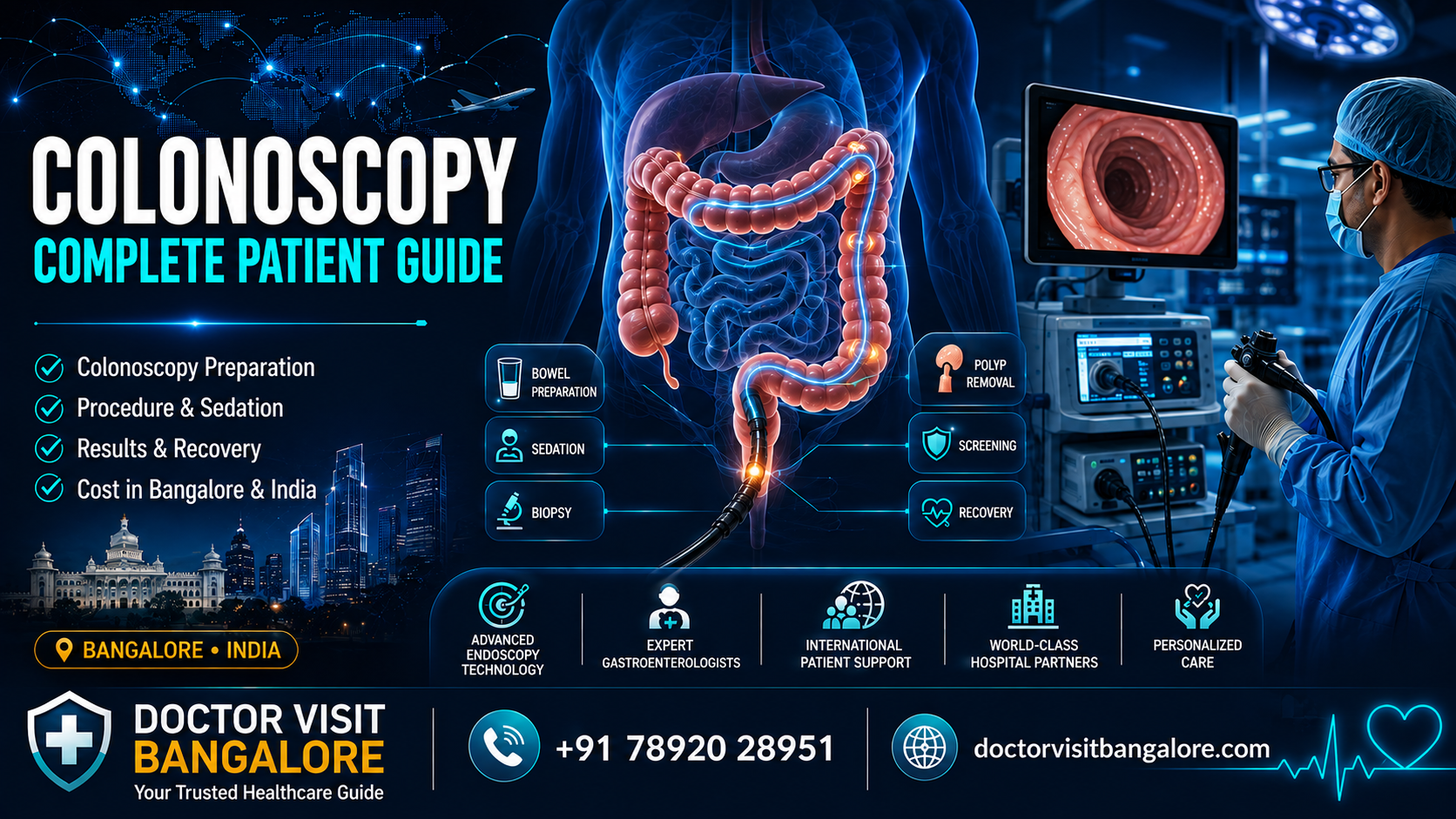
What Is a Colonoscopy?
The colon, also called the large intestine, is the final section of the digestive tract that absorbs water and forms stool before it leaves the body through the rectum. A colonoscopy lets a doctor — usually a gastroenterologist, a specialist in digestive-system conditions — look directly at the inner lining of this entire length of bowel.
The instrument used is called a colonoscope: a thin, flexible tube with a tiny light and camera at the tip. As the doctor gently guides it through the colon, images are displayed on a screen in real time, allowing a detailed look at the bowel wall for anything unusual — inflammation, bleeding, abnormal growths, or other changes.
If the doctor sees an area that needs closer evaluation, small tissue samples (a biopsy) can be taken during the same procedure and sent to a laboratory for examination under a microscope. Similarly, if small growths called polyps are found, many can be removed on the spot — a step that can be both diagnostic and, in the case of certain polyps, preventive for colorectal cancer.
Why Is a Colonoscopy Done?
Colonoscopies are performed for two broad reasons: to investigate a specific symptom or finding (diagnostic), or to check for early disease in someone without symptoms (screening).
Diagnostic reasons a doctor might recommend a colonoscopy
- Blood in the stool or rectal bleeding
- A persistent, unexplained change in bowel habits
- Unexplained anemia (low blood count), which can sometimes be linked to slow bleeding in the digestive tract
- Persistent diarrhea without a clear cause
- Unexplained abdominal symptoms that haven’t resolved with initial treatment
- Unexplained weight loss, when the treating doctor considers it clinically relevant
- Suspected inflammatory bowel disease (a group of conditions involving chronic inflammation of the digestive tract)
- Following up on an abnormal finding from another test, such as a stool test or imaging scan
Screening reasons
Colorectal cancer often develops slowly from polyps, and colonoscopy is one of the few screening tests that can both detect and, in many cases, remove those polyps before they become cancer. Screening guidelines have shifted in recent years toward starting at a younger age, reflecting rising colorectal cancer rates among younger adults. Screening guidance in India and other countries can differ, and the right age and interval for any individual also depends on family history and personal risk factors — this is a decision to make with your own doctor, not a fixed number for everyone.
What Can a Colonoscopy Detect?
A colonoscopy can identify a range of conditions affecting the colon and rectum, including:
- Colorectal cancer, often at earlier and more treatable stages
- Polyps — small growths on the bowel lining, most of which are not cancerous but some of which can become cancerous over time if not removed
- Inflammation, including patterns consistent with inflammatory bowel disease such as ulcerative colitis or Crohn’s disease
- Sources of bleeding in the lower digestive tract
- Diverticular disease — small pouches that can form in the wall of the colon
- Other structural abnormalities of the colon lining
Colonoscopy Preparation
Bowel preparation is arguably the most important part of a successful colonoscopy. The colon needs to be as clear of stool as possible so the doctor can see the lining clearly — an incompletely prepared bowel can hide polyps or abnormalities and sometimes means the procedure has to be repeated sooner than planned.
Preparation instructions vary significantly depending on your health, medications, kidney function, heart conditions, diabetes, any previous experience with bowel preparation, the type of procedure planned, and the specific regimen your hospital or endoscopy center prescribes. The outline below explains the typical structure of preparation — always follow the specific instructions given by your own doctor or endoscopy team if they differ from this general information.
Several days before the procedure
Doctors often advise adjusting your diet in the days leading up to the test — commonly reducing high-fiber foods and anything that could leave residue in the bowel. Your team may also ask you to review your regular medications, particularly blood thinners, iron supplements, or diabetes medications, since some may need to be paused or adjusted under medical supervision.
The day before the procedure
Most centers transition patients to a clear-liquid diet on the day before the colonoscopy. “Clear liquids” typically means fluids you can see through — think clear broth, plain water, certain juices without pulp, and electrolyte drinks — but the exact list should come from your endoscopy center, since some centers are stricter than others about color or specific items.
Bowel preparation itself
This usually involves drinking a prescribed bowel-cleansing solution according to a timed schedule set by your doctor. This step is designed to flush the colon so it is empty and visible during the procedure. Because the exact product, dose, and timing depend on your medical history and the endoscopy center’s protocol, this is one area where following your own doctor’s written instructions — rather than generic information online — matters most.
Day of the procedure
You will typically be asked to stop eating and drinking for a defined period before your appointment (fasting instructions vary by center and by the type of sedation planned). You’ll usually be told which regular medications to take with a small sip of water and which to hold. Arrange for someone to accompany you and drive you home if sedation is planned, since you will not be permitted to drive yourself afterward.
What Can You Eat Before a Colonoscopy?
The table below gives a general sense of how common foods are typically handled in the days leading up to a colonoscopy. This is general information only — your own endoscopy center’s instructions always take priority, since some regimens are more or less restrictive, and timing (how many days versus how many hours before the procedure) changes the answer for almost every item below.
| Food / Drink | Usually Allowed? | Important Note |
|---|---|---|
| White rice | Often fine a few days before, not on prep day | Low-residue in small amounts; avoid close to the clear-liquid phase |
| Roti / chapati | Similar to rice | Whole-grain versions are usually restricted sooner than refined ones |
| Bread (white/refined) | Often fine earlier in the week | Whole-grain or seeded bread usually restricted sooner |
| Eggs | Often fine a few days before | Considered low-residue by many centers, but confirm timing |
| Chicken (plain, boneless) | Often fine a few days before | Avoid heavily spiced or fibrous preparations |
| Vegetables | Restricted as the procedure approaches | Fiber and skins are usually the first things removed from the diet |
| Fruits | Restricted as the procedure approaches | Seeds, skins, and pulp are usually restricted first |
| Milk | Often restricted on the clear-liquid day | Dairy is not considered a “clear” liquid by most centers |
| Tea (plain, no milk) | Sometimes allowed on clear-liquid day | Confirm whether your center allows tea without milk |
| Coffee (plain, no milk) | Sometimes allowed on clear-liquid day | Same caveat as tea — ask your center directly |
| Coconut water | Often allowed on clear-liquid day | Confirm with your center, as some restrict pulp-containing varieties |
| Fruit juice (clear, no pulp) | Sometimes allowed | Red or purple juices are usually avoided |
| Clear broth | Usually allowed on clear-liquid day | Should be strained, without solid pieces or fat |
| Water | Allowed throughout, until the fasting window begins | Stay well hydrated during bowel preparation |
| ORS / electrolyte drinks | Often allowed and sometimes encouraged | Helps offset fluid loss during bowel prep |
What Foods Should You Avoid Before a Colonoscopy?
As the procedure gets closer, most endoscopy centers ask patients to avoid foods that are high in fiber or likely to leave residue in the bowel, since undigested material can obscure the doctor’s view. Commonly restricted items include:
- High-fiber foods such as whole grains, bran, and legumes
- Seeds and nuts, including foods that contain small seeds (such as certain berries)
- Raw fruits and vegetables with skins, or those known to be fibrous
- Foods generally recognized as leaving residue in the digestive tract
- Red or purple-colored drinks and foods, since the coloring can be mistaken for blood on the bowel lining during the examination
- Anything specifically restricted by your endoscopy center’s written instructions, even if it isn’t on a general list like this one
If you are ever unsure whether something is allowed, it is safer to skip it and ask your endoscopy team, rather than guess.
Colonoscopy Procedure — What Happens Step by Step?
- Arrival. You arrive at the hospital or endoscopy center, usually at a scheduled time that allows for preparation before the procedure itself.
- Registration and check-in. Administrative formalities, identity verification, and confirmation of your procedure details.
- Medical review. A nurse or doctor reviews your medical history, current medications, and confirms your bowel preparation was completed.
- Consent. You’ll be asked to sign an informed consent form after your doctor explains the procedure, its purpose, and its risks.
- IV access, if needed. If sedation is planned, a small intravenous line is usually placed in your arm or hand.
- Sedation/anesthesia discussion. The team confirms which sedation approach is planned for you and answers any last questions.
- Positioning. You’ll typically lie on your side on the examination table.
- Colonoscope insertion. The doctor gently inserts the colonoscope through the rectum and advances it through the colon.
- Examination. The doctor examines the bowel lining carefully as the scope is advanced and then slowly withdrawn, since most careful inspection happens during withdrawal.
- Biopsy or polyp removal, if needed. If anything requires sampling or removal, this is typically done during the same procedure using instruments passed through the scope.
- Withdrawal and completion. Once the examination is complete, the scope is withdrawn and the procedure ends.
- Recovery area. You are monitored, often until any sedation begins to wear off.
- Discharge instructions. You receive guidance on eating, activity, and any warning signs to watch for, along with information on when results or biopsy findings will be available.
Some patients feel pressure, mild cramping, or an urge to pass gas during the procedure, particularly if sedation is light or not used. Others, especially under deeper sedation, remember very little of the procedure itself.
Is Colonoscopy Painful?
This varies genuinely from person to person, and it would be inaccurate to promise a painless experience for everyone. Some patients describe mild discomfort — bloating, cramping, or a feeling of pressure as air or carbon dioxide is used to expand the colon for a clearer view. Others, particularly with sedation, report little to no discomfort and limited memory of the procedure.
Factors that can affect comfort include the type and depth of sedation used, individual pain tolerance, the anatomy of your colon, whether any additional procedures (like polyp removal) were performed, and the skill and pacing of the endoscopist. If you are anxious about discomfort, it is a reasonable and common question to raise directly with your gastroenterologist before the procedure — they can explain the sedation options available at their facility.
Colonoscopy Sedation and Anesthesia
Not every colonoscopy uses the same approach to sedation, and the right choice depends on the patient, the procedure planned, the facility’s practice, and clinical judgment on the day. Broadly, the options include:
- No sedation. Some patients undergo colonoscopy without any sedation, particularly where clinically appropriate and where the patient prefers it.
- Conscious or moderate sedation. Medication is given to help the patient relax and feel drowsy, while still able to respond to instructions. Many patients have little memory of the procedure afterward.
- Deeper sedation or anesthesia, where applicable. Some facilities offer deeper sedation, sometimes involving an anesthesiologist, for patients who need or prefer to be more deeply asleep during the procedure.
Which option is used — and whether all of these are even available — depends on the specific hospital or endoscopy center. This is a good question to ask directly when booking your procedure.
How Long Does a Colonoscopy Take?
The examination itself commonly takes roughly 20 to 45 minutes, though this can be shorter or longer depending on findings, whether biopsies or polyp removal are performed, and individual anatomy. However, the total time spent at the facility is longer than this window alone — it typically includes check-in and preparation time before the procedure and monitored recovery time afterward, particularly if sedation was used. Many patients should plan for a few hours at the facility in total, though exact timing depends on the center’s workflow and your specific situation.
What Happens After a Colonoscopy?
Immediately after the procedure, you’ll typically rest in a recovery area while any sedation wears off. Mild bloating, gas, or cramping is common in the hours afterward as the air or gas used during the procedure works its way out of the digestive system — this usually settles on its own.
Most patients can eat and drink normally again fairly soon after the procedure, though your team will give you specific instructions based on what was done. If sedation was used, you will not be permitted to drive yourself home, operate machinery, or make important decisions for the rest of that day — plan for someone to accompany you. Most people can return to normal activities, including work, within a day, though this depends on the individual, the type of sedation used, and whether any additional procedures like polyp removal were performed.
Follow-up is usually arranged to discuss results, particularly if a biopsy was taken. As always, instructions from your own treating team take priority over general guidance like this.
What to Eat After a Colonoscopy
Most centers suggest starting with hydration and light meals before gradually returning to your normal diet over the following day, though instructions vary depending on what was done during your procedure.
- Hydration is usually the first priority, since bowel preparation can be dehydrating.
- Light meals, if you prefer to ease back into eating, are commonly suggested rather than immediately eating a large or heavy meal.
- Gradual return to normal food is typical over the following day, once you feel comfortable.
- If your doctor removed a polyp or took a biopsy, they may give you specific dietary or activity precautions for a short period afterward — follow these specifically, since they can differ from general post-colonoscopy advice.
Colonoscopy Risks and Possible Side Effects
Colonoscopy is generally considered a low-risk procedure, and most patients experience nothing more than mild, temporary bloating or discomfort. That said, like any medical procedure, it carries some risk of complications, and patients deserve a clear, honest picture rather than either exaggeration or false reassurance.
Common and generally minor effects include bloating, gas, and mild abdominal discomfort in the hours after the procedure.
Less common but more serious risks can include:
- Bleeding, particularly if a biopsy was taken or a polyp was removed. Published safety research has found bleeding rates in the range of roughly 16–27 per 10,000 colonoscopies overall, rising notably higher when a therapeutic step such as polyp removal was performed.
- Perforation — a tear in the bowel wall — is uncommon. Published estimates suggest the risk during a purely diagnostic colonoscopy is well under 1%, rising somewhat when certain therapeutic endoscopic procedures are performed.
- Reaction to sedation, ranging from mild to, rarely, more significant cardiovascular or respiratory effects, particularly in patients with existing heart or lung conditions.
- Infection, which is uncommon with standard precautions.
- Rarely, complications requiring hospitalization or further intervention.
When Should You Seek Medical Help After a Colonoscopy?
Most recovery is uneventful, but it’s important to know the warning signs that warrant prompt medical attention. Contact your healthcare team or seek urgent care if you experience:
- Severe or worsening abdominal pain
- Significant or persistent rectal bleeding
- Persistent vomiting
- Fever
- Difficulty breathing
- Fainting or severe weakness
- Any other symptom specifically flagged in your discharge instructions
When in doubt, it is always safer to contact your treating team or seek medical attention than to wait and see.
Colonoscopy Results — What Do They Mean?
Colonoscopy results generally fall into a few broad categories, though your own doctor is the right person to explain what your specific report means for you.
- Normal colonoscopy. No polyps, abnormal tissue, or concerning findings were seen.
- Polyps found. Growths on the bowel lining were identified, and may have been removed during the procedure.
- Inflammation. Signs consistent with inflammatory changes, which your doctor will interpret alongside your symptoms and other tests.
- Bleeding source identified, if that was the reason for the procedure.
- Diverticular disease, referring to small pouches in the colon wall.
- Suspicious lesions, which typically prompt a biopsy for further evaluation.
If a biopsy was taken, results are not usually available immediately — pathology processing generally takes some additional days, and your doctor will discuss the findings with you once they are ready. This guide cannot and does not interpret individual patient reports; that conversation belongs with your treating physician.
What Happens If a Polyp Is Found During Colonoscopy?
A polyp is a small growth on the inner lining of the colon. Most polyps are not cancerous, but certain types can develop into cancer over time if left in place, which is why doctors commonly remove polyps found during a colonoscopy rather than simply noting them.
If a polyp is removed, it is generally sent to a pathology laboratory for examination. The type, size, and number of polyps found — determined through this pathology review — help your doctor decide how soon you should have a follow-up or repeat colonoscopy. This surveillance interval is individualized and depends on clinical guidelines, your pathology results, and your personal risk factors; it is not something that can be stated as a fixed rule for every patient in a general article like this one.
Colonoscopy vs. Other Tests
Colonoscopy vs Endoscopy
“Endoscopy” is a broad term referring to any procedure using a scope to look inside the body, so a colonoscopy is technically one type of endoscopy. In everyday conversation, however, people often use “endoscopy” to mean an upper gastrointestinal endoscopy (sometimes called a gastroscopy), which examines a different part of the digestive tract.
| Colonoscopy | Upper GI Endoscopy (Gastroscopy) | |
|---|---|---|
| Body area examined | Colon and rectum (lower digestive tract) | Esophagus, stomach, and first part of the small intestine (upper digestive tract) |
| Common reasons | Bleeding, bowel habit changes, screening, unexplained anemia | Heartburn, difficulty swallowing, upper abdominal pain, suspected ulcers |
| How it’s performed | Scope passed through the rectum | Scope passed through the mouth |
| Preparation | Bowel cleansing required | Usually just fasting; no bowel-cleansing prep needed |
| Can involve biopsy? | Yes | Yes |
Colonoscopy vs Sigmoidoscopy
The key difference is how much of the bowel is examined. A colonoscopy examines the entire length of the colon, while a flexible sigmoidoscopy examines only the lower portion — the sigmoid colon and rectum. Because a sigmoidoscopy covers less of the bowel, it may miss abnormalities located further up in the colon, which is one reason colonoscopy is often preferred when a complete examination is needed.
Colonoscopy vs CT Colonography
CT colonography (sometimes called a “virtual colonoscopy”) uses CT scanning rather than a scope to create images of the colon.
| Colonoscopy | CT Colonography | |
|---|---|---|
| Invasiveness | A scope is inserted into the bowel | No scope is inserted; imaging-based |
| Bowel preparation | Required | Also generally required |
| Sedation | Commonly used | Not typically needed |
| Can remove polyps during the test? | Yes | No — a separate colonoscopy is needed if a polyp or abnormality is found |
| Radiation exposure | None | Involves a small amount of radiation |
| Follow-up if abnormal | Findings can often be addressed immediately | A follow-up colonoscopy is usually required to investigate or treat anything found |
Because CT colonography cannot remove polyps or take biopsies during the same test, many patients who have an abnormal finding on this scan will still need a follow-up colonoscopy — a consideration worth discussing with your doctor when comparing options.
Colonoscopy Cost in Bangalore and India
One of the most common questions patients ask is simply: how much does a colonoscopy cost? The honest answer is that it varies — sometimes considerably — based on a number of factors, and any number quoted without context should be treated as a starting point for a conversation, not a fixed price.
Factors that influence the final cost include:
- The hospital or endoscopy center
- The gastroenterologist performing the procedure
- Whether sedation or anesthesia is used, and what type
- Whether a biopsy is taken
- Whether a polyp is found and removed
- Pathology / laboratory charges for any tissue samples
- The initial consultation fee
- General facility charges (which can vary between hospitals of different tiers)
- Whether the procedure is planned in advance or performed on an emergency basis
- Any additional investigations the doctor recommends alongside the colonoscopy
Before booking, ask the hospital directly:
- Is the gastroenterologist consultation included in the quoted price?
- Is sedation included, and what type is offered?
- Is biopsy included if the doctor decides one is needed?
- Is pathology (laboratory analysis of any tissue sample) included?
- Is polyp removal included if a polyp is found?
- Are there additional facility or admission charges?
- What bowel preparation is required, and is it included in the cost?
- How soon will biopsy results be available, and how will they be communicated?
If you are trying to understand realistic cost expectations for a colonoscopy in Bangalore, Doctor Visit Bangalore can help you understand what typically drives the final price and what questions to ask before booking — without guaranteeing or setting any hospital’s pricing.
Colonoscopy in Bangalore
Bangalore has a wide range of hospitals and dedicated endoscopy centers offering colonoscopy, from large multi-specialty hospitals to focused gastroenterology clinics. Rather than naming any single facility as “the best” — a claim that isn’t objectively verifiable and varies by patient need — it’s more useful to understand what genuinely matters when evaluating where to go.
Factors worth considering:
Colonoscopy in India for International Patients
Bangalore, along with several other Indian cities, sees a meaningful number of international patients seeking gastrointestinal evaluation and treatment, often because of shorter waiting times or cost considerations compared to their home country. For patients considering this path, understanding the general journey helps set realistic expectations.
A typical process looks something like this:
- Share previous medical reports. Any prior tests, symptoms history, or relevant records are shared with the hospital or a coordinating service before travel.
- Initial medical review. The receiving team reviews what’s been shared to understand the case.
- Consultation with a gastroenterologist, sometimes available remotely before travel, and always in person before the procedure itself.
- Pre-procedure evaluation, including any additional tests the doctor considers necessary.
- Colonoscopy preparation, following the specific instructions provided once you’re in India.
- The colonoscopy itself.
- Biopsy or polyp removal, if clinically indicated during the procedure.
- Pathology analysis, if tissue samples were taken.
- Doctor review of findings and results.
- Follow-up planning, including any further tests or treatment discussion.
- Return-travel considerations — planning enough time in-country to allow for the consultation, procedure, recovery, and, if applicable, waiting for pathology results before your treating doctor confirms it is appropriate to travel home.
International patients should build sufficient flexibility into their travel plans, since biopsy results and follow-up discussions can take additional days. It’s also important to independently confirm your own visa requirements, travel arrangements, and any documentation the receiving hospital requires — these are outside what any coordination service can guarantee.
Doctor Visit Bangalore helps international patients understand the general process, coordinate practical logistics such as appointments and travel support, and connect with appropriate healthcare providers in Bangalore — without providing medical advice or guaranteeing treatment outcomes.
Frequently Asked Questions About Colonoscopy
What is a colonoscopy?
Why do doctors recommend colonoscopy?
Is colonoscopy painful?
How long does colonoscopy take?
How should I prepare for a colonoscopy?
What can I eat before colonoscopy?
Can I drink water before colonoscopy?
Can I drink tea before colonoscopy?
Can I drink coffee before colonoscopy?
Can I eat rice before colonoscopy?
Can I eat eggs before colonoscopy?
Can I eat chicken before colonoscopy?
Can I drink milk before colonoscopy?
What happens if the bowel is not completely clean?
Can colonoscopy detect cancer?
What happens if a polyp is found?
Is sedation used during colonoscopy?
What should I eat after colonoscopy?
How much does colonoscopy cost in Bangalore?
How long does it take to recover from colonoscopy?
Can I go to work after colonoscopy?
When should I seek medical help after colonoscopy?
What is the difference between colonoscopy and endoscopy?
Can international patients get colonoscopy in Bangalore?
Final Word
A colonoscopy can feel intimidating before you’ve had one — the preparation, the sedation questions, the waiting for results. Most of that anxiety comes from not knowing what to expect, not from the procedure itself.
What actually protects you is simple: honest preparation, an experienced gastroenterologist, and a facility that takes the time to explain what’s happening at every step — before, during, and after.
Whether you’re booking a screening colonoscopy, investigating a symptom, or planning to travel to Bangalore for the procedure, the right information upfront makes the entire experience less stressful and more predictable.
If you have questions about preparation, cost, sedation, or choosing where to go in Bangalore — we’re happy to help, free of charge.
The right information, at the right time, changes everything.

Arman Ali is the founder of Doctor Visit Bangalore, a trusted healthcare navigation platform helping patients find verified doctors, hospitals, and specialists across Bangalore and all over in India. With hands-on experience in healthcare research and patient assistance, Arman has personally helped hundreds of domestic and international patients connect with leading hospitals including Apollo, Manipal, Fortis, and Aster. His content is grounded in real hospital data, treatment cost research, and direct coordination with medical professionals across Bangalore. He specializes in medical tourism guidance, treatment cost transparency, and specialist discovery for complex conditions including cancer, cardiac surgery, and orthopedic care.