
The first dialysis bill does not frighten a family as much as the question that comes after it: how many times will we need to do this every week, and for how many months or years?
Dialysis is not like a one-time surgery or a single hospital visit. It becomes a routine. It affects work, food, travel, family time, monthly budget, and sometimes even where a patient can live. For many families in Bangalore, the real worry is not only “What is the dialysis cost today?” It is “Can we afford this safely every week?”
A familiar story: a patient named Sanjay came from Agartala to Bangalore after swelling in the legs, breathlessness at night, loss of appetite, and very high creatinine. The family first thinks dialysis may be needed once or twice. Then the nephrologist explains that the kidneys are not recovering and regular dialysis may be required.
That moment is heavy. The family starts calculating travel, session cost, medicines, blood tests, injections, food restrictions, and whether kidney transplant is possible. This guide is written for that exact moment — when a family needs calm, clear, practical information.
WhatsApp Doctor Visit Bangalore for free patient guidance. Call +91 78920 28951 or WhatsApp Now.
- The Day Dialysis Became a Family Routine
- What Is Dialysis?
- Who Needs Dialysis?
- Types of Dialysis: Hemodialysis vs Peritoneal Dialysis
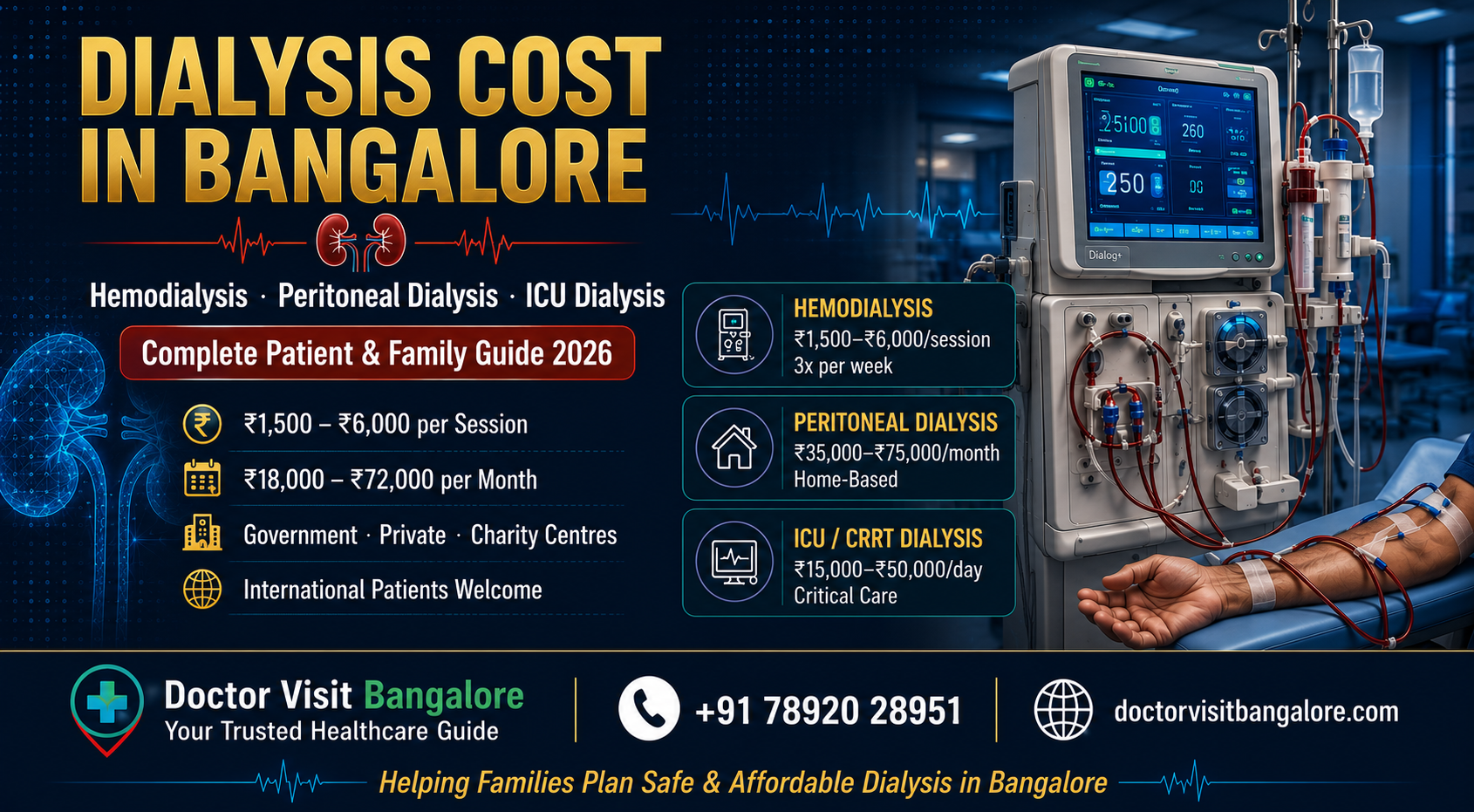
- Dialysis Cost in Bangalore 2026
- Monthly Dialysis Cost: Real Family Budget
- Best Hospitals and Dialysis Centres in Bangalore
- Government vs Private Dialysis Cost
- Dialysis for International Patients in Bangalore
- Dialysis vs Kidney Transplant
- Food, Travel, Work and Lifestyle During Dialysis
- Step-by-Step: How to Plan Dialysis in Bangalore
- Frequently Asked Questions
1. The Day Dialysis Became a Family Routine
Kidney failure often enters a family slowly. First there is tiredness. Then swelling in the feet. Then BP becomes difficult to control. Then appetite reduces. Sometimes the patient feels breathless while lying down. Blood tests show high creatinine and urea. Potassium may rise. Hemoglobin may fall.
For some patients, dialysis begins in an emergency. For others, the nephrologist prepares them gradually with an AV fistula, diet plan, medicines, and scheduled dialysis sessions. But emotionally, it is still a major change.
The patient begins to ask: Can I work? Can I travel? Will I need dialysis forever? Can I get a kidney transplant? What if I miss one session? What food should I avoid? Will I still pass urine?
The family asks different questions: Which centre is safe? How much will it cost per month? Is a cheaper dialysis centre okay? Should we choose a big hospital? Can we get subsidized dialysis? What if infection happens? What if the patient is diabetic or has heart disease?
This guide answers these questions in practical language.
2. What Is Dialysis?
Dialysis is a treatment used when the kidneys cannot remove enough waste, toxins, extra salt, and extra fluid from the body. Healthy kidneys work every day, silently filtering blood and balancing water, minerals, acid levels, blood pressure, and waste products.
When kidneys fail, waste products such as urea and creatinine build up. Potassium may rise. Fluid can collect in the lungs or legs. Blood pressure may become dangerous. Patients may feel weak, nauseous, itchy, breathless, confused, or unable to eat.
Dialysis does not cure kidney failure. It replaces part of kidney function so the patient can feel better, live longer, and remain stable while continuing long-term treatment or waiting for kidney transplant evaluation.
3. Who Needs Dialysis?
Dialysis is usually needed when kidney function becomes very low and the body cannot stay safe with medicines and diet alone. Many patients start dialysis when kidney function is severely reduced and symptoms of kidney failure appear.
The decision is not based on creatinine alone. A nephrologist looks at symptoms, eGFR, potassium, fluid overload, urine output, BP, diabetes, heart condition, blood acidity, and overall health.
Common reasons dialysis may be advised
- Stage 5 chronic kidney disease or end-stage kidney disease
- Very high creatinine and urea with symptoms
- Breathlessness due to fluid overload
- High potassium not controlled by medicines
- Severe swelling in legs, face, or body
- Loss of appetite, vomiting, confusion, drowsiness, or severe weakness
- Uncontrolled BP with kidney failure
- Emergency acute kidney injury in ICU or severe illness
4. Types of Dialysis: Hemodialysis vs Peritoneal Dialysis
There are two main dialysis options for most kidney failure patients: hemodialysis and peritoneal dialysis. Both can help remove waste and extra fluid, but they work differently and fit different lifestyles.
Hemodialysis
Hemodialysis is the most common type of dialysis. The patient’s blood passes through a machine and a filter called a dialyzer. The machine removes waste and extra fluid, then returns the filtered blood to the body.
In-centre hemodialysis is usually done three times per week, and each session often takes around four hours. Some patients need more or less depending on their weight, fluid gain, blood reports, urine output, and doctor’s advice.
Peritoneal Dialysis
Peritoneal dialysis uses the lining inside the abdomen as a natural filter. A soft catheter is placed in the belly. Dialysis fluid goes into the abdomen, stays there for a period, absorbs waste and extra fluid, and is then drained out.
Peritoneal dialysis can often be done at home after training. It may suit selected patients who want more flexibility, live far from a dialysis centre, or prefer home-based treatment. But it needs careful hygiene and family understanding to reduce infection risk.
| Type | Where It Is Done | Frequency | Best Suited For |
|---|---|---|---|
| Hemodialysis | Dialysis centre or hospital | Usually 2–3 times/week | Most long-term dialysis patients, patients needing supervised treatment |
| Peritoneal Dialysis | Home | Daily exchanges or overnight cycler | Selected stable patients who can maintain hygiene and training |
| ICU Dialysis / CRRT | ICU | Continuous or prolonged | Critically ill patients with unstable BP or severe illness |
5. Dialysis Cost in Bangalore 2026
Dialysis cost in Bangalore depends on the centre, hospital category, type of dialysis, infection status, medicines, injections, blood tests, transport, access procedure, and whether the patient is stable or admitted.
A basic dialysis centre may cost much less than a premium private hospital. A stable outpatient dialysis session is different from ICU dialysis. A patient with hepatitis infection may need separate machine allocation or special precautions, which may affect availability and cost.
| Dialysis / Kidney Care Service | Approx. Cost in Bangalore | Approx. USD | Notes |
|---|---|---|---|
| Nephrologist consultation | ₹800 – ₹2,500 | $10 – $30 | Depends on hospital and doctor seniority |
| Hemodialysis per session, basic centre | ₹1,500 – ₹3,000 | $18 – $36 | Usually 2–3 sessions per week |
| Hemodialysis per session, private hospital | ₹3,000 – ₹6,000 | $36 – $72 | Higher in premium hospitals or complex patients |
| Monthly hemodialysis, 3 sessions/week | ₹18,000 – ₹72,000 | $215 – $865 | Approx. 12 sessions/month, dialysis only |
| Temporary dialysis catheter insertion | ₹8,000 – ₹35,000 | $95 – $420 | Used when urgent access is needed |
| AV fistula surgery | ₹25,000 – ₹80,000 | $300 – $960 | Preferred long-term access for hemodialysis |
| Peritoneal dialysis monthly supplies | ₹35,000 – ₹75,000+ | $420 – $900+ | Depends on CAPD/APD plan and supplies |
| ICU dialysis / CRRT per day | ₹15,000 – ₹50,000+ | $180 – $600+ | For unstable ICU patients |
| Kidney transplant evaluation | ₹25,000 – ₹1 lakh+ | $300 – $1,200+ | Before transplant planning |
6. Monthly Dialysis Cost: Real Family Budget
The true cost of dialysis is not only the session fee. Families should calculate monthly cost. A patient who needs dialysis three times per week may need around 12 sessions every month. Even a moderate per-session fee becomes a major long-term expense.
Apart from dialysis, patients may need EPO injections for anemia, iron therapy, BP medicines, diabetes medicines, phosphate binders, blood tests, transport, special diet, and occasional admissions.
| Monthly Expense | Approx. INR | Approx. USD | Why It Matters |
|---|---|---|---|
| Dialysis sessions, 12/month | ₹18,000 – ₹72,000 | $215 – $865 | Main recurring cost |
| Medicines and BP/diabetes control | ₹2,000 – ₹10,000+ | $24 – $120+ | Depends on patient condition |
| Anemia injections / iron support | ₹3,000 – ₹15,000+ | $36 – $180+ | Common in long-term kidney disease |
| Monthly blood tests | ₹1,500 – ₹8,000 | $18 – $95 | Creatinine, potassium, CBC, calcium, phosphorus, etc. |
| Transport and food planning | ₹2,000 – ₹15,000+ | $24 – $180+ | Depends on distance and family support |
For many families, the monthly dialysis budget may range from ₹25,000 to more than ₹1 lakh, depending on the centre and patient condition. This is why choosing the right dialysis centre is both a medical and financial decision.
7. Best Hospitals and Dialysis Centres in Bangalore
Bangalore has multiple options for dialysis: government hospitals, charitable centres, standalone dialysis units, kidney-speciality hospitals, multispeciality hospitals, and premium hospitals. The best choice depends on affordability, safety, distance, infection status, doctor supervision, emergency support, and whether the patient may need transplant evaluation.
| Hospital / Centre Type | Strength | Best Suited For |
|---|---|---|
| Government hospitals | Lower-cost or subsidized dialysis, nephrology support in larger centres | Patients needing affordability and public-sector care |
| NU Hospitals | Kidney, urology and nephrology-focused care in Bangalore | Kidney disease, dialysis planning, urology and transplant-related evaluation |
| Manipal Hospitals | Advanced nephrology, dialysis, ICU, and kidney transplant ecosystem | Complex kidney disease, private hospital dialysis, transplant planning |
| Aster CMI Hospital | Nephrology, ICU support, multispeciality care, North Bangalore access | Patients near Hebbal, Yelahanka, airport side, and international patients |
| Apollo Hospitals Bangalore | Multispeciality nephrology, dialysis and international patient services | Premium hospital care and medical tourism patients |
| Narayana Health | Large hospital network with renal sciences and multispeciality backup | Patients needing broader hospital support and kidney care coordination |
| Standalone dialysis centres | Convenient local dialysis, often lower cost than premium hospitals | Stable patients needing regular maintenance dialysis close to home |
8. Government vs Private Dialysis Cost
Government and charitable dialysis centres may be more affordable, but waiting time and slot availability can be a challenge. Private hospitals may cost more but can be better suited for complicated patients who need ICU, cardiology, infection care, emergency admission, or transplant evaluation.
9. Dialysis for International Patients in Bangalore
International patients do come to Bangalore for kidney-related treatment, but usually not only for lifelong routine dialysis. Most international patients come for nephrology second opinion, kidney transplant evaluation, dialysis during medical travel, dialysis before another treatment, or complex kidney disease management.
A patient from Bangladesh, Africa, the Middle East, Maldives, or another country may need dialysis while staying in Bangalore for transplant planning, cancer treatment, heart treatment, or post-surgery recovery. In such cases, dialysis slots should be arranged before travel.
Documents international patients should carry
- Latest creatinine, urea, potassium, sodium, calcium and phosphorus reports
- Hemoglobin, CBC, albumin and recent blood test summary
- Dialysis schedule and last dialysis date
- Dialysis access details: AV fistula, graft, or catheter
- Hepatitis B, Hepatitis C and HIV reports
- Blood group and current medicines
- Nephrologist summary and discharge summaries
- Kidney transplant documents, if transplant is being considered
10. Dialysis vs Kidney Transplant
Dialysis supports life, but kidney transplant may offer better long-term quality of life for suitable patients. Not every patient is eligible for transplant. Age, heart condition, infection status, cancer history, diabetes control, donor availability, legal rules, and overall fitness must be assessed.
Some patients remain on dialysis for years. Some use dialysis as a bridge to transplant. Some elderly or very sick patients may choose conservative kidney care after discussion with family and doctors.
| Option | What It Means | Best For |
|---|---|---|
| Long-term Dialysis | Regular dialysis sessions to replace part of kidney function | Patients not ready or not eligible for transplant |
| Kidney Transplant | Healthy kidney from living or deceased donor is transplanted | Eligible patients with suitable donor or transplant listing |
| Conservative Kidney Care | Symptom-focused care without dialysis or transplant | Selected elderly or very frail patients after specialist discussion |
11. Food, Travel, Work and Lifestyle During Dialysis
Dialysis changes daily life, but many patients continue working, travelling, attending family events, and living meaningful lives after adjusting to the schedule. The key is discipline: never miss sessions without doctor advice, control fluid intake, follow kidney diet, and keep regular blood tests.
Common lifestyle changes
- Fluid restriction may be needed, especially if urine output is low
- Salt, potassium and phosphorus may need control
- Protein intake must be planned with dietitian guidance
- BP and diabetes control become very important
- Dialysis access must be protected from injury or infection
- Travel needs advance dialysis slot planning
- Missed dialysis can cause fluid overload, high potassium, and emergency risk
12. Step-by-Step: How to Plan Dialysis in Bangalore
Share Kidney Reports
Send creatinine, urea, potassium, eGFR, urine output, BP, diabetes status, and latest discharge summary if available.
Consult a Nephrologist
A nephrologist decides whether dialysis is urgent, planned, temporary, long-term, or avoidable for now.
Choose Dialysis Type
Discuss hemodialysis, peritoneal dialysis, access creation, home feasibility, cost and lifestyle impact.
Compare Centre and Monthly Cost
Check per-session cost, doctor supervision, emergency support, distance, infection policy, and slot availability.
Plan Long-Term Kidney Care
Ask whether transplant evaluation, AV fistula, diet plan, anemia management, and vaccination are needed.
13. Frequently Asked Questions
What is the average dialysis cost in Bangalore?
Hemodialysis in Bangalore may cost around ₹1,500 to ₹6,000 per session depending on centre, hospital, patient condition and infection status.
How many dialysis sessions are needed per week?
Many hemodialysis patients need three sessions per week, but the schedule depends on kidney function, urine output, fluid gain, blood reports and nephrologist advice.
Is dialysis permanent?
Dialysis may be temporary in acute kidney injury if kidneys recover. In end-stage chronic kidney disease, dialysis is often long-term unless kidney transplant is possible.
Can dialysis cure kidney failure?
No. Dialysis does not cure kidney failure. It replaces part of kidney function by removing waste and extra fluid from the body.
Which is better: hemodialysis or peritoneal dialysis?
Both can be effective. Hemodialysis is usually centre-based and supervised. Peritoneal dialysis is home-based and needs training, hygiene and patient/family discipline.
Can international patients get dialysis in Bangalore?
Yes, but dialysis slots should be arranged before travel. International patients should carry kidney reports, infection screening reports, medication list and dialysis schedule.
Can a dialysis patient travel?
Yes, many dialysis patients travel, but sessions must be arranged in advance at the destination. Missing dialysis without medical advice can be dangerous.
Final Word
Dialysis changes a family’s calendar. It turns certain days of the week into hospital days. It changes what the patient eats, how much water they drink, how far they can travel, and how the family plans money every month.
But dialysis is not the end of life. For many patients, it is the treatment that gives time: time to become stable, time to continue family life, time to prepare for transplant evaluation, and time to make decisions with clarity instead of panic.
The most important decision is not only finding the cheapest dialysis in Bangalore. It is finding safe dialysis that the family can afford repeatedly, with nephrologist guidance, infection safety, emergency backup, and a long-term kidney plan.
The first step costs nothing. Just reach out.
Sources: National Institute of Diabetes and Digestive and Kidney Diseases information on kidney failure treatment, hemodialysis and peritoneal dialysis; public hospital information from Bangalore kidney care centres; recent public reports on dialysis access and dialysis unit expansion in India.
Useful references: NIDDK Kidney Failure Treatment Options, NIDDK Hemodialysis, NIDDK Peritoneal Dialysis.
This page follows the Doctor Visit Bangalore Editorial Policy. Information is reviewed regularly and updated for accuracy. This guide is for informational purposes only and does not replace consultation with a qualified nephrologist.

Arman Ali is the founder of Doctor Visit Bangalore, a trusted healthcare navigation platform helping patients find verified doctors, hospitals, and specialists across Bangalore and all over in India. With hands-on experience in healthcare research and patient assistance, Arman has personally helped hundreds of domestic and international patients connect with leading hospitals including Apollo, Manipal, Fortis, and Aster. His content is grounded in real hospital data, treatment cost research, and direct coordination with medical professionals across Bangalore. He specializes in medical tourism guidance, treatment cost transparency, and specialist discovery for complex conditions including cancer, cardiac surgery, and orthopedic care.